Dernières nouvelles
Fondeurs et héros civilisateurs |
1er octobre 2026 |
Was the invention of metal a transformative social upheaval? As ancient as it may be, the discovery of fire reveals the Hero. With the Neolithic age, this figure becomes a civilizing force. The rites of fire entail the emergence of a priesthood, embodied in the solar king, builder and founder of cities, and in the master of fire, mines, and the forge. Metal and warfare make their appearance. Warriors, wheels, and weapons are deified. Monumental grandeur glorifies the gods. Monsters and dragons emerge from the abyss. In his quest for immortality, the blacksmith acquires a sinister reputation. A new form of sacredness comes into being. Sanctuaries arise: mountains covered with engravings, cosmic enclosures, nuragic towers, and colossal burial monuments for distinguished dead. Every social class has its own hero, and its own myths. Myriam Philibert, Fondeurs et héros civilisateurs. Mots-clés : feu / métal / héros civilisateur / monstres / forgeron / mythes solaires. Pour accéder à nos publications, cliquez ici. |
|
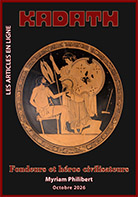 L’invention du métal fut-elle un choc sociétal probant
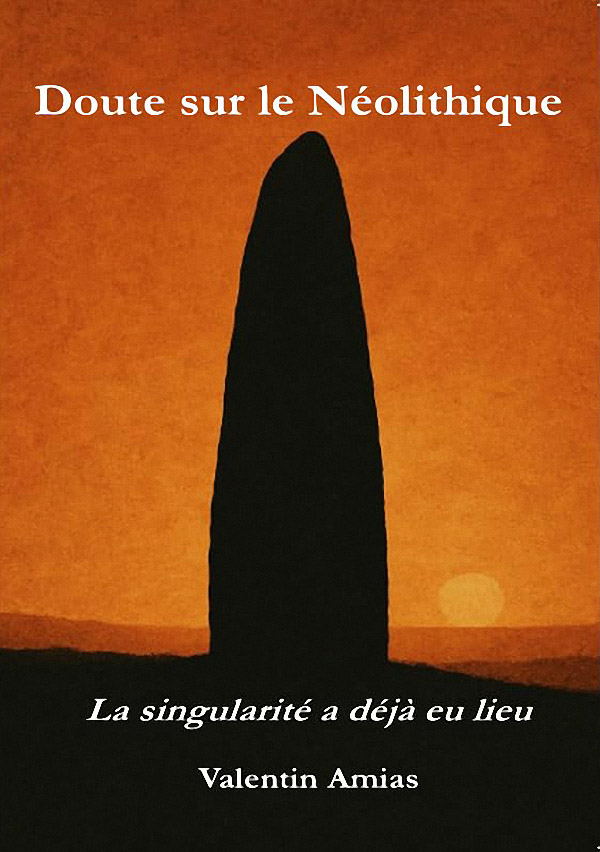
Doute sur le Néolithique, La singularité a déjà eu lieu – Valentin Amias |
22 septembre 2026 |
« Partout sur la planète, d’imposants monuments de pierre témoignent d’un passé énigmatique. Vestiges mystérieux d’une humanité dite “primitive”, les mégalithes révèlent pourtant, par leurs esthétiques, leurs orientations et leurs positions, un savoir d’une étonnante sophistication, bien au-delà de ce que l’histoire officielle admet. » S’agirait-il donc d’un énième livre sur les mégalithes ? Oui et non. Oui, parce qu’il y est bien question de sites mégalithiques stricto sensu1, depuis Göbekli Tepe jusqu’aux champs de dolmens d’Algérie, en passant par l’incontournable Stonehenge. Oui et non, parce que l’auteur élargit notablement la notion de mégalithe en y incluant des ensembles faits de « mégapierres », tels Sacsayhuamán et le complexe de Gizeh. Non, parce que Valentin Amias ne se limite pas à la pure description du phénomène mégalithique mais le contextualise en l’inscrivant dans un autre horizon de pensée, bousculant allègrement les limites d’une vision du Néolithique que certains voudraient figée une bonne fois pour toutes. En fait, on peut dire que sa démarche de départ s’inscrit dans le concept développé par le philosophe et historien des sciences Thomas Kuhn, selon lequel les paradigmes scientifiques généralement acceptés se succèdent, le passage de l’un à l’autre donnant lieu à une brutale rupture, en raison de leur inconciliabilité. Et manifestement, nous sommes en train de vivre en direct ce temps de rupture. Ce n’est pas ici le lieu de décrire par le menu chaque chapitre du livre de Valentin Amias. Je me contenterai donc d’en commenter certains aspects au fil des pages, laissant aux lecteur le plaisir d’une découverte approfondie. Tout commence avec un constat, déjà bien connu des lecteurs de Kadath : « […] quelque chose ne colle pas. Des monuments d’une complexité inouïe surgissent là où l’on attendait de simples abris. Des savoirs avancés se manifestent au sein d’une humanité traditionnellement qualifiée de primitive. Les indices de relations disparues s’observent entre des sites archéologiques que tout sépare dans l’espace et le temps. […] [Mon] travail n’a pas pour ambition de proclamer une vérité concurrente, mais d’esquisser les contours d’un nouvel espace des possibles. »
Ainsi, évoquant le développement de la culture natoufienne, entre 12 500 et 9 500 avant notre ère, l’auteur souligne que si « l’émergence de la transition néolithique était initialement attribuée principalement à des facteurs environnementaux, donc externes aux communautés, cette nouvelle interprétation met l’accent sur l’importance des déclencheurs culturels et cognitifs internes. » Par parenthèse, voilà une démarche qui fait penser aux travaux du géographe Paul Wheatley avec sa théorie du « centre cérémoniel dispersé », hypothèse selon laquelle les plus anciennes villes ont été construites autour des sanctuaires, c’est-à-dire à proximité d’un espace sacré, d’un « Centre du Monde ». C’est l’occasion pour Valentin Amias d’évoquer quelques-uns de ces grands sites anatoliens qui font la une de l’actualité archéologique depuis quelques dizaines d’années, et qui n’en finissent pas d’étonner les chercheurs, et ce un peu plus chaque jour. Nevali Çori, Karahan Tepe, Göbekli Tepe ; autant de réalisations architecturales qui témoignent de l’essor du mégalithisme en tant qu’élément majeur de la transition néolithique. En outre, souligne l’auteur, l’émergence du phénomène mégalithique ne se limite pas à cette région du monde. Pour preuve, l’existence du mystérieux site sous-marin de Yonaguni, au large d’Okinawa au Japon. Qualifiées de « pyramide inachevée » et dont l’âge est estimé à 12 000 ans, ces structures mégalithiques encore fort peu étudiées pourraient, elles aussi, s’inscrire comme marqueurs de la transition néolithique. Si la dimension mondiale du phénomène mégalithique est aujourd’hui parfaitement admise, les débuts du phénomène sont encore source de débats et, dans ce contexte, l’essai de Valentin Amias est évidemment le bienvenu. En conclusion de ce chapitre, l’auteur souligne que « [Göbekli Tepe et Yonaguni] témoignent de l’instant inaugural d’un basculement, le moment où l’humanité, encore paléolithique par son mode de vie, devient néolithique par son “mode d’être”. » D’accord avec cette proposition, je la nuancerai toutefois en rappelant que, outre le fait que le caractère artificiel de Yonaguni demande encore à être confirmé, la recherche et l’étude d’autres sites témoins de cet universalisme, ailleurs dans le monde, doit impérativement être poursuivie. Et à ce propos, il est peut-être temps de réexaminer d’un œil neuf le site actuellement fort délaissé de Bimini. La découverte d’un autre chapitre peut laisser un peu perplexe. Je l’ai signalé en introduction, Valentin Amias déborde du cadre strictement mégalithique en abordant des sites et des périodes que je qualifierai d’exogène : pyramides égyptiennes et péruviennes, ziggurats mésopotamiennes, constructions troglodytes de Cappadoce, et jusqu’à la cité indusienne de Mohenjo-daro faite de très modestes briques, le plus souvent crues et de dimensions standard qui n’ont rien de mégalithique (soit 7 x 15 x 31 cm pour être précis). L’auteur tente de justifier la largeur de son râteau en considérant que « tous les ouvrages mégalithiques, de Göbekli Tepe et Yonaguni jusqu’à ceux construits au début de l’ère des civilisations, relèvent d’une même catégorie, d’un même phénomène, indépendamment de leur apparence, fonction, taille ou méthode de construction. » L’ambition est certes louable mais je ne peux m’empêcher de penser que, dans ce cas peut-être, qui trop embrasse mal étreint. Ainsi, et pour prendre l’exemple des pyramides de Gizeh, on croit comprendre qu’elles seraient filles légitimes des mégalithes néolithiques. Mais c’est oublier que lesdites pyramides sont surtout l’aboutissement d’une évolution amorcée avec les tombeaux en briques crues de la période thinite. Bref, arrivé en fin de chapitre, reste quand même un petit arrière-goût de fourre-tout qui, fatalement, risque de dégrader peu ou prou le jugement d’une partie de son lectorat. Toutefois, ne jetons pas le bébé avec l’eau du bain : le génie mégalithique existe indéniablement, et notre auteur en détaille fort bien caractéristiques et mystères associés, dans sa description de différents sites. Mais, et ceci est à mettre à son actif, Amias ne tombe pas dans le piège du sensationnalisme si fréquent en cette matière. Ainsi souligne-t-il fort justement que « [des expérimentations] ont montré que les blocs de Stonehenge et les obélisques égyptiens pouvaient être déplacés et mis en place par des équipes d’ouvriers en petit nombre, à l’aide de méthodes simples mais suffisamment ingénieuses, confirmant que les constructeurs “possédaient une sophistication intellectuelle encore plus grande qu’on ne l’imaginait auparavant”. » Et finalement, la question principale, sur laquelle se focalisent tant de chercheurs, n’est pas le « comment », mais bien le « pourquoi » de ces réalisations. Dans les prochains mois, Kadath compte revenir longuement sur cette thématique. Parmi les sujets les plus délicats, la question de la similitude mégalithique figure en bonne place, et notre auteur ne se prive pas de l’aborder franchement. Ainsi qu’il le souligne, « le choix d’un type d’architecture particulier peut tout à fait résulter d’un choix original et autonome. » Il en résulte que des ressemblances plus ou moins marquées entre deux sites n’impliquent pas nécessairement une influence de l’un sur l’autre ; c’est tout simplement qu’à une même problématique correspond une même évidente solution. Cela dit, il existe des cas où des coïncidences, troublantes comme les qualifie Amias, nécessitent de pousser plus avant la réflexion ; le tout est de ne pas la pousser trop loin. Par exemple, la similitude entre des mégalithes présents dans l’aire eurasienne peut tout à fait s’expliquer, comme le précise l’auteur, par l’existence de liens culturels. Et je préciserai d’ailleurs qu’à ces liens culturels, on peut ajouter des liens commerciaux, et ce très tôt dans la préhistoire des deux continents. Mais qu’en est-il maintenant lorsque l’on s’aventure à comparer – un cas célèbre dans le milieu – pyramides égyptiennes et mésoaméricaines ? Peut-on raisonnablement entreprendre d’associer les structures de Gizeh et celles de Teotihuacán ? C’est qu’entre les deux sites s’ouvre un double gouffre, spatial et temporel. Et si, pour l’aspect spatial, on pourrait à la rigueur envisager des contacts transocéaniques, le volet temporel relève du casse-tête : environ 2600 avant notre ère pour l’égyptienne Khéops, environ 100 de notre ère pour la pyramide du soleil. Casse-tête non résolu, soit, mais que cela ne nous conduise pas à ranger la question dans le placard (plutôt encombré) des « circulez, y a rien à voir ». Amias conclut ce chapitre en rappelant tout d’abord qu’il s’agit « d’éviter les conclusions hâtives et les interprétations abusives ». Mais face au blocage mental dont fait preuve le champ académique, il convient de « définir un cadre interprétatif capable d’accueillir, sans contradiction interne, l’intégralité des pièces longtemps reléguées à la marge. » D’autres sujets, aussi passionnants que controversés, sont développés par l’auteur, dans ce même esprit, que je qualifierai de prudente liberté. On retrouve ainsi, en toile de fond, la tradition primordiale avec, en tête de gondole, l’incontournable Atlantide et les alignements de sites, sur courtes distances aussi bien qu’à l’échelle transcontinentale (dont le célèbre « île de Pâques-Cuzco-Gizeh »), tout cela assorti de tableaux chiffrés, de schémas détaillés et de bibliographies thématiques en soutien de l’argumentation. En conclusion, je citerai cette pensée d’Alexandre von Humboldt, pensée qui servit régulièrement de mantra introductif aux publications de Kadath :
Belle et positive pensée ; encore faut-il qu’elle puisse se concrétiser sur le terrain par l’action de toutes les bonnes volontés. Cela ne fait pas de doute : par son travail, Valentin Amias fait partie de ceux qui font avancer les choses. Jacques Gossart 
1 On entend par là « une construction monumentale constituée d’une ou de plusieurs pierres brutes de grandes dimensions peu ou pas taillées, érigées sans mortier ni ciment pour fixer la structure ». [Wikipedia] |
|
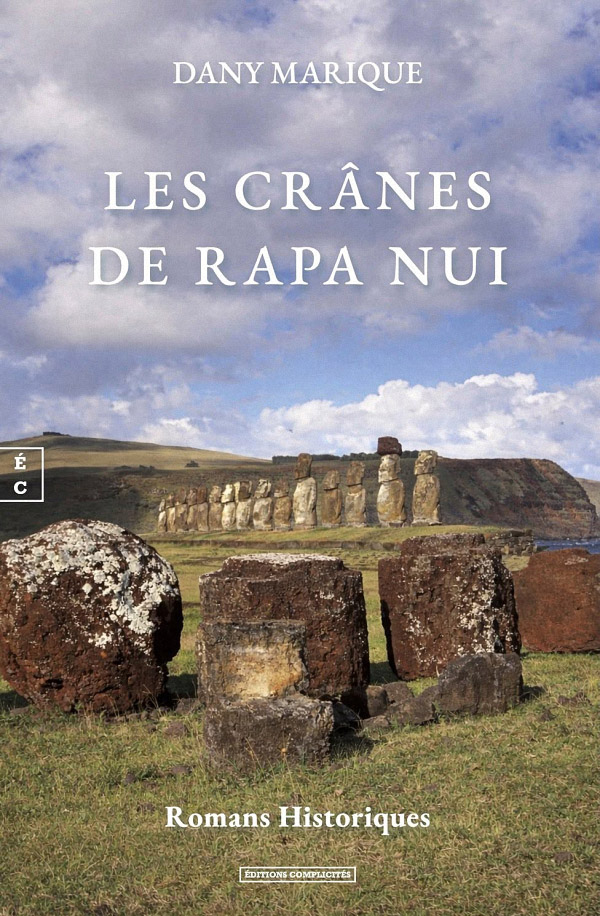
Les crânes de Rapa Nui – Dany Marique |
22 septembre 2026 |
D’une certaine manière, nous ne quittons pas tout à fait le thème mégalithique, avec ce voyage à l’île de Pâques et ses gigantesques moaï. Mais ce qui change à présent, c’est le genre littéraire puisqu’il s’agit d’un roman historique. Mondialement célèbre pour son millier de statues monumentales, Rapa Nui est l’île la plus isolée et la plus intrigante de l’océan Pacifique. Mais derrière ce peuple de pierre existe surtout un peuple de chair. Durant plus de six siècles, le peuple Rapanui vécut en autarcie complète, développant la civilisation la plus singulière de toute la Polynésie. Mais dès les premiers contacts avec les « civilisés », l’équilibre ancestral se brise : déportations, esclavagisme, évangélisation forcée, spoliation des terres, vols d’objets sacrés, négation de la cosmovision pascuane… En quelques décennies, les Rapanui frôlent l’anéantissement. À travers une fresque romanesque nourrie de faits historiques, Dany Marique décortique les mécanismes de la colonisation au XIXe siècle, les ambigüités des puissances européennes et les destins brisés d’une société confrontée à l’effacement de son identité. Le passage brutal de leur monde fini à un monde infini se révèle être, encore maintenant, un traumatisme profond. Un épisode véridique, raconté dans ce roman, est souvent ignoré : Rapa Nui aurait pu devenir un territoire français, mais l’Histoire en décida autrement. Ce livre fait également la part belle à la fascinante culture des anciens, il expose les idées et les hypothèses actuelles en archéologie. J.G. 
|
|
Île de Pâques, Les larmes du Moaï |
22 septembre 2026 |
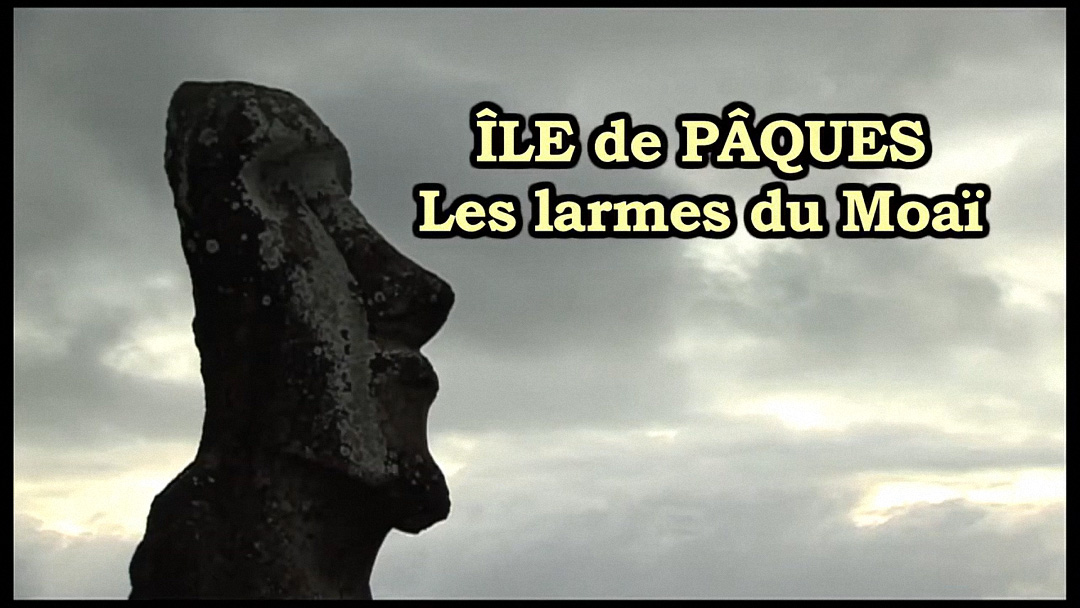
Un film de Dany Marique et Patrick Ferryn (2014) Cette île fantastique – découverte en 1722 par le hollandais Roggeveen, évangélisée dès 1864 par des prêtres français, et annexée au Chili en 1888 – n’est qu’un simple triangle volcanique de cent soixante kilomètres carrés perdu dans le Pacifique. Mais c'est l’une des dernières énigmes archéologiques de l’Humanité ! Son vrai nom est Rapa Nui, le nom aussi de ses autochtones. Ici, des statues à figuration humaine, des géants dédaigneux fichés en terre dans une terrible garde silencieuse, ne cessent d’interroger l'homme. Ce film est en droite ligne de celui de Francis Mazière, cinquante ans plus tard. Les Rapanui d'aujourd'hui recherchent leurs origines, leurs ancêtres, leur écriture perdue, mais aussi leur autonomie… Dany Marique et Patrick Ferryn ont voulu donner la parole aux Rapanui. En changeant de monde, les habitants de l’île vivent des joies et des peines, mais se confrontent aux réalités et aux exigences du monde moderne. Cependant, ils en sont très conscients. Peut-être est-ce dû à leur singulière insularité, à la fois dans le temps et l’espace. Rapa Nui peut nous servir de réflexion, de parabole, ou de sonnette d’alarme… 🎬 Regarder le documentaire (2 parties)Cliquez sur l'une des parties ci-dessous pour ouvrir directement le film sur YouTube. ▶ Île de PÂQUES, les Larmes du Moaï (1ère partie) ▶ Île de PÂQUES, les Larmes du Moaï (2e partie) |
|
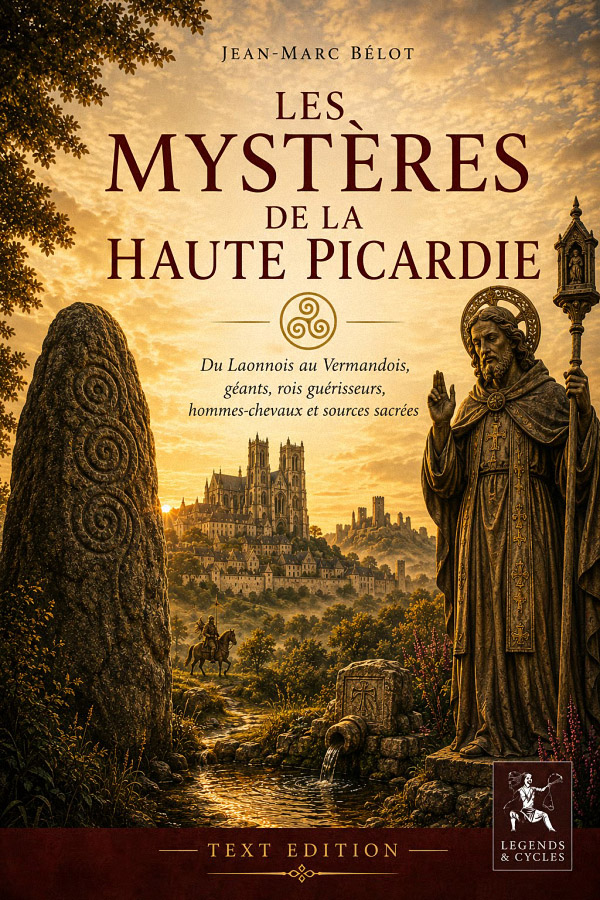
Les Mystères de la Haute Picardie – Jean-Marc Bélot |
22 septembre 2026 |
Jean-Marc Bélot n’est certes pas un inconnu pour les lecteurs de Kadath : il est intervenu régulièrement dans la revue, avec la publication d’articles sur des sujets aussi divers que passionnants, comme Les momies d’Ürümchi (Kadath n° 96), les hill figures d’Outre-Manche (97), L’archéologie acoustique (99), ou encore Göbekli Tepe (101). Il propose aujourd’hui un ouvrage sur les mystères de la Haute Picardie ; un sujet qui intéressera au premier chef les valeureux Picards (qu’ils soient de la Haute ou de la Basse), mais aussi leurs voisins belges de Wallonie picarde et, finalement, tous ceux qui s’intéressent à ces légendes ; de celles qui défient le temps et continuent à nous enchanter… dans tous les sens du terme.
Ainsi donc, entre la montagne de Laon, la vallée de l’Oise, les forêts de Saint-Gobain, les sanctuaires de Corbény, les sources de la Somme et de l’Escaut, le Vermandois et les bocages de Thiérache, Les Mystères de la Haute Picardie explore l’un des plus vastes paysages légendaires du nord de la France. Plus qu’un simple recueil de folklore régional, cet ouvrage propose une lecture cohérente de la Haute Picardie comme terre des origines : origine des reliefs avec les géants, origine des guérisons avec les saints et les fontaines, origine des routes avec les hommes-chevaux, origine des fleuves avec la Somme et l’Escaut, origine des survivances avec les haies, les forêts et les ruisseaux de Thiérache. Sous les villes, les cathédrales, les sources, les ruines et les chemins affleurent encore les traces des anciens dieux, des rois guérisseurs, des saints porteurs de reliques, des forgerons, des verriers, des pèlerins et des créatures qui ont façonné ce territoire singulier. J.G. 
|
|
Écrire avec des cordelettes torsadées, la fonction scripturale des quipus andins |
11 juin 2026 |
It was in 2015 that Sabine Hyland, an anthropologist internationally recognized for her work on the Andean khipus, had the opportunity to study two khipus preserved by the local authorities of a Peruvian village. According to the villagers, these sacred khipus recount episodes of war in the form of letters. The analysis shows that these documents contain 95 distinct symbols, a number that brings them closer to logosyllabic writing systems. Such complexity presupposes the existence of a writing system, probably logosyllabic, challenging the classic hypothesis according to which khipus are simple memory aids used only to note numbers. Sabine Hyland, Écrire avec des cordelettes torsadées, la fonction scripturale des quipus andins. Mots-clés : ayllu / cayte / Collata / écriture logosyllabique / inca / quechua / quipu. Pour accéder à nos publications, cliquez ici. |
|
 C’est en 2015 que Sabine Hyland, anthropologue reconnue à l’international pour ses travaux sur les quipus andins, a eu l’occasion d’étudier deux quipus préservés par les autorités locales d'un village péruvien. Selon les villageois, ces quipus sacrés relatent des épisodes de guerre sous forme de lettres. L'analyse montre que ces documents comportent 95 symboles distincts, un nombre qui les rapproche des systèmes d'écriture logosyllabiques. Une telle complexité suppose l'existence d'un système d'écriture, probablement logosyllabique, remettant en question l’hypothèse classique selon laquelle les quipus seraient de simples aide-mémoire servant uniquement à noter des chiffres.
Le chamanisme, vogue ou renouveau ? |
15 janvier 2026 |
We are witnessing a revival of shamanism. Why bring back a practice from the depths of ancient times? Who is this intriguing figure? In search of privileged connections with nature, but also with the invisible worlds, he works during a masterful performance. A master of magical flight, he soars, thanks to the rhythmic beats of his drum, from the underworld to the frozen skies. A powerful spirit has become his guide and initiated him into a marginal reality. He enters trance to captivate lost souls or, more prosaically, to heal a suffering body. In short, here is an extraordinary being who has traversed millennia, laid bare by cave art, and who continues to spark fascination. Myriam Philibert, Le chamanisme, vogue ou renouveau ? Mots-clés : chaman / vol magique / esprits guides / tambour / Harappa / art des cavernes Pour accéder à nos publications, cliquez ici. |
|
 On assiste à un renouveau du chamanisme. Pourquoi remettre en vogue une pratique issue du fonds des âges
La Grande Déesse de l’Indus |
8 décembre 2025 |
This article deals with a particular point in the history of the Indus civilization, namely its religion. The civilization of the Indus (or “harappean”), develops in the basin of the river Indus. It fully flourished around 2600 BC and began its decline at the beginning of the second millennium BC. While the other cultures of the Indian subcontinent can be compared to those of the megalithic West, the civilization of the Indus presents all the characteristics of a highly developed society: refined urbanization, commercial activities with an international character, arts of remarkable finesse, use of a handwriting not yet decoded. As for its religion, and although our knowledge in this field remains fragmentary, we can argue that its main elements are the basis of what will become the Hindu religion. Jacques Gossart, La Grande Déesse de l’Indus. Essai de reconstitution de la religion harappéenne. Mots-clés : apsara / Ārya / danseuse / Grande Déesse / Harappa / Indus / jaïnisme / Kālī / śakti / Shiva / Śiva / Veda Pour accéder à nos publications, cliquez ici. |
|
 Cet article traite d’un point particulier de l’histoire de la civilisation de l’Indus, à savoir sa religion. La civilisation de l’Indus (ou «
Mythes des peuples sans écriture |
1er septembre 2025 |
This is an intreguing topic, that of early primitive myths that have travelled through ages, carried by oral communication. At what period shall be expect to bring up their beginnings or their coming out ? The homo sapiens period? Concepts as strong as life and death, man and woman, have been at the origin of early interrogations. As a womb of manking, the cave stands at the place when one is born, lives and dies. What about the Animal people whose divesity and energy have birth to bewitchments. Even deprived of wrings, the horse is omnipresent through successive worlds, the mammouth assures itself as a pillar of the earth which it has drawned out of chaos. They all seen to emerge from Dream time, produced by Another world, like the bird that stole the fire or the myth of supernatural woman. Those spirits omnipresents in nature end in turning into admitted deities of life. It is the time when he experiences the painful nostalgia of the Paradise where he had lived at the beginning. Myriam Philibert, Mythes des peuples sans écriture. Mots-clés : mythes / caverne / homo sapiens / peuple Animal / rites Pour accéder à nos publications, cliquez ici. |
|
 Intrigante question que celle des mythes premiers, des mythes qui ont traversé les âges, véhiculés par la tradition orale. À quelle époque espère-t-on faire remonter leur naissance ou leur émergence
Salomon et la reine de Saba |
1er août 2025 |
Taking up the work formerly presented by Immanuel Velikovsky in his book Ages in Chaos, Damien F. Mackey proposes here new elements in favor of the hypothesis according to which Hatshepsut, the pharaoh of the 18th Egyptian dynasty, was actually the biblical queen of Saba. The main argument put forward is the presence of Solomon himself, in Egyptian inscriptions, under the identity of Senenmut, the grey eminence of Hatshepsut. Damien F. Mackey, Salomon et la reine de Saba, traduit de l’anglais par Stéphane Normand. Mots-clés : Deir el-Bahari / Hatchepsout / Pount / reine de Saba / Salomon / Sénènmout / Solon / Velikovsky Pour accéder à nos publications, cliquez ici. |
|
 Prenant le relais des travaux jadis présentés par Immanuel Velikovsky dans son livre Ages in Chaos (Le Désordre des siècles pour la version française), Damien F. Mackey propose ici de nouveaux éléments en faveur de l’hypothèse selon laquelle Hatchepsout, la pharaonne de la XVIIIe dynastie égyptienne, était en fait la reine de Saba biblique. L’argument principal avancé est la présence de Salomon lui-même, dans les inscriptions égyptiennes, sous l’identité de Sénènmout, l’éminence grise d’Hatchepsout.
Le site de Hartashen, un espace sacré ? |
15 mai 2025 |
The megalithic avenue of Hartashen is located in Armenia. This mysterious site is composed of large stone monoliths that are meticulously aligned across the landscape by marrying the edge of the Khish-Khish river. Hartashen is located in the region of Shirak, 33 km from Gyumri, the second largest city in Armenia after the capital Yerevan. It presents a series of three rows of megaliths extending for about 600 m, each consisting of more than 200 megaliths. Would it be a ceremonial path, an ancient observatory, or something quite different? The site has only recently been the subject of scientific study, and the true function of Hartashen remains shrouded in mystery. Cosmogonic myths could give the key to these questions. Lousine Terteryan : Le site de Hartashen, un espace sacré ? Un casse-tête archéologique et historique. Mots-clés : Hartashen / mégalithes / alignements / Carnac / Merrivale / mythe cosmogonique / vénération de pierre. Pour accéder à nos publications, cliquez ici. |
|
 L’avenue mégalithique de Hartashen se trouve en Arménie. Ce site mystérieux est composé de grands monolithes de pierre qui sont méticuleusement alignés à travers le paysage en épousant le bord de la rivière Khish-Khish. Hartashen est situé dans la région de Shirak, à 33 km de Gyumri, deuxième grande ville d’Arménie après la capitale Erevan. Il présente une série de trois rangées de mégalithes s’étendant sur environ 600 m, chacune composée de plus de 200 mégalithes. Serait-il un chemin cérémoniel, un ancien observatoire, ou quelque chose de tout à fait différent
In memoriam Jean Bianco |
8 avril 2025 |
C’est avec tristesse que nous avons appris le décès de Jean Bianco, survenu le 18 février 2025, à l’âge de 79 ans.
Fin connaisseur de toutes les matières relatives à l’île de Pâques, Jean Bianco s’était spécialisé dans le déchiffrement de l’écriture rongo rongo. À la suite des recherches de l’ethnologue et épigraphiste allemand Thomas Bartel, Jean travaillait à établir l’existence d’un rapport direct entre la mythologie polynésienne et les connaissances astronomiques de ce peuple. Il avait publié plusieurs articles dans Kadath, et ce dès 1976. Citons ainsi : « Thomas Barthel et le déchiffrement de l’écriture pascuane » (n° 20), « Comment je déchiffre l’écriture pascuane » (n° 22), « Les divisions du temps à Tahiti et en Polynésie » (n° 33), « Pré-inventaire des statues pascuanes » (n° 64). |
|

Nouvelle publication : Continuité du substrat dans la religion et l’iconographie indo-européennes |
7 mars 2025 |
* Sur cette culture, voir les articles en ligne déjà publiés par Kadath.This article deals with the possible persistence of female figures, religious or not, and their accompanying iconography, discovered among artifacts of the culture of the Indus Valley*, in comparison with texts and iconography found in later cultures of India, including the Indo-European superstrate. The author examines the iconography of seals representing female and feline figures, seals discovered in the Indus valley and in Indian texts such as the Devīmāhātmyam. Also examined are female “display figures” from the Indus Valley and Indian “Lajjā Gaurī” figures from the early centuries of this era found in temples located in India. * On this culture, see the online articles already published by Kadath.Miriam Robbins Dexter : Continuité du substrat dans la religion et l’iconographie indo-européennes, Sceaux et figurines de la culture de la vallée de l’Indus et figures féminines indiennes historiques. Mots-clés : chamanisme / cornes / Devī / Devīmāhātmyam / Durgā / félin / féminin / figuier / Ghaggar-Hakra / Harappā / Indus / Lajjā Gaurī /
Pour accéder à nos publications, cliquez ici. |
|
 Cet article traite de la possible persistance des figures féminines, de nature religieuse ou non, ainsi que de leur iconographie d’accompagnement, découvertes parmi les artefacts de la culture de la vallée de l’Indus*, en comparaison avec les textes et l’iconographie trouvés dans les cultures postérieures de l’Inde, dont la superstrate indo-européenne. L’autrice examine l’iconographie des sceaux représentant des figures féminines et félines, sceaux mis au jour dans la vallée de l’Indus et dans les textes indiens tels que le Devīmāhātmyam. Sont également examinées des «
Nouvelle publication en ligne : Les Ligures, peuple mythique ? |
6 janvier 2025 |
The Trophy of the Alps above Monaco, marks the end of ancient Ligurian Provence and that of Celtic territories. For a long time, the Italian Liguria became the IX Regio of the Roman Republic. Thereafter, began the pondering upon the mysterious Ligurians or Ligyes, whose former territories are now reduced to skin and bones, even though they had once colonized the entire south of France and a quarter of Italy. A few names, such as the Salyes who lived near Marseille, dwell in time and intrigue. The elusive words of an untranslatable language call out for attention. Substructures rise on vertiginous peaks, the impregnable “Castellaras”. What do we really know about the Ligurians, an unknown people whose mythical origins are lost in Neolithic times by the shores of the Mediterranean Sea? Should we forget a supposed “celto-ligurian” association and classify this linguistic group among pre-Indo-European languages? Myriam Philibert, Les Ligures, peuple mythique ? Mots-clés : ethnie / territoires ligyens / linguistique / castellaras / taureau sacré. Pour accéder à nos publications, cliquez ici. |
|
 Le trophée des Alpes au-dessus de Monaco marque la fin de la Ligurie provençale antique et de la Celtique (Gaule). Depuis longtemps, la Ligurie italienne est devenue IX Regio de la République romaine. Débute alors le questionnement sur les mystérieux Ligures ou Ligyens, dont les territoires se réduisent maintenant à peau de chagrin, alors qu’ils avaient colonisé tout le sud de la France et un quart de l’Italie. Quelques noms, comme les Salyens voisins de Marseille, demeurent et intriguent. Les mots insaisissables d’une langue intraduisible interpellent. Des substructions se dressent sur des sommets vertigineux, les «
Nouvelle publication en ligne : Il était une fois un chien mythique : Gamp’r ou Garmr ? |
18 novembre 2024 |
Two mythical characters, belonging to two different cultures and eras, have very similar names: Garmr or Garm for the first one, Gamp'r for the second. Garmr is from Nordic mythology, Gamp'r from the Armenian. But is it possible that there is a similarity other than phonetic between these two creatures? Gamp'r is quite well known, as a dog species and as a legendary character; this is not the case for Garm, who is mentioned only once in the sources of Nordic legends and myths. In several Indo-European languages, the word for dog also means wolf. In the beliefs of these peoples, the dog has two incarnations: linked to death, it embodies evil and is represented in black; linked to life and resurrection, it embodies good, and is represented in white. The article reviews and compares the legendary representations of these dogs, addressing the similarities between Gamp’r and Garm from two angles: the etymology of the name and the ideology of the cult. Lousine Terteryan, Il était une fois un chien mythique : Gamp’r ou Garmr ? Mots-clés : Garm / Gamp'r / chien / chien-ailé / Aralez / Valhalla / Ragnarök / premier animal domestique / inhumation pour chien / légendes indo-européennes / grogner. Pour accéder à nos publications, cliquez ici. |
|
 Deux personnages mythiques, appartenant à deux cultures et époques différentes, ont des noms fort approchants
Nouvelle publication en ligne : Dégradations climatiques en Chine antique |
5 octobre 2024 |
It is well known that ancient Chinese written records are an invaluable source of historical information on astronomy, technology, economy, and climate, dating back in some cases to the second millennium BCE. Numerous studies have established that the climatic consequences of the ejection of volcanic aerosols into the atmosphere can have a major impact on the climate worldwide. Here, the Chinese evidence of such a severe climatic anomaly during the decade of the 530s is first reviewed. These indicate more than one massive volcanic eruption during this decade, although which volcano was responsible has not yet been conclusively established. Even more severe than 1815, the “year without a summer,” due to the eruption of Tambora, in 536–537 summer frosts and snowfall occurred in China causing multiyear drought, crop failures, and catastrophic famine. Study of pre-imperial Chinese texts gives reason to believe that in mid-second millennium BCE a massive loading of the atmosphere with volcanic aerosols from the eruption of Thera (Santorini) may have been the cause of dramatic climatic downturn in the sixteenth century BCE. Dating of the events based on verifiable records of astronomical phenomena suggests that the long-remembered ancient calamity could have been caused by the eruption of Thera in the eastern Mediterranean(*). This benchmark date can be helpful in establishing a secure chronology of eastern Mediterranean kingdoms in the period. David W. Pankenier, Les dégradations climatiques en Chine causées par des éruptions volcaniques en 535-40 EC, ainsi que par celle de Théra (Santorin) comme événement inaugural de la dynastie Shang (1562 AEC), traduit de l’anglais (américain) par Stéphane Normand. Mots-clés : chronologie / anomalies climatiques / début de l'histoire chinoise / Théra / éruptions volcaniques / années sans été. Pour accéder à nos publications, cliquez ici. (*)
|
|
 Le fait est bien connu que les anciennes archives écrites chinoises constituent une source inestimable de renseignements historiques concernant l'astronomie, la technologie, l'économie et le climat. Certaines d'entre elles remontent au deuxième millénaire avant notre ère. De nombreuses études ont établi que les conséquences de l'éjection dans l'atmosphère d'aérosols volcaniques est susceptible d'avoir un impact majeur sur le climat de toute la planète. Les éléments de preuve, d'origine chinoise, d'une anomalie climatique de ce type dans les années 530 sont d'abord examinés dans cet article. Ces éléments indiquent plus d'une éruption volcanique massive au cours de cette décennie, bien qu'on ne sache pas encore de façon sûre quel volcan en a été le lieu. De manière plus sévère encore qu'en 1815, «
In memoriam Gérard Deuquet |
30 septembre 2024 |
Le 25 juillet 2024, Gérard Deuquet nous a quittés. Il avait 87 ans. Mars 1973 : parution du n° 1 de Kadath. Pour la première fois, la couverture de la revue apparaît dans les rayons des librairies. Comme les autres éléments graphiques – dont le si caractéristique lettrage des titres – cette couverture est l’œuvre de Gérard, alors tout jeune peintre belge attiré par le réalisme fantastique en archéologie. Ainsi qu’il s’en expliquait en 2013, « lorsqu’en 1972, j’ai rencontré Ivan Verheyden à l’occasion d’une de mes expositions, j’ai été aussitôt emballé par le projet de création d’une revue entièrement consacrée aux civilisations disparues. » [in Gérard Deuquet en cinq questions.] Au fil des 40 années d’existence de la revue sous sa forme papier, chaque numéro sera ainsi illustré d’un dessin original de Gérard, en rapport avec le thème principal traité dans le numéro. Il interviendra en outre ponctuellement pour illustrer en bande dessinée et à sa manière ce passage du Livre d’Hénoch, dans lequel les anges apprirent aux humains « l’art de peindre le tour des yeux à l’antimoine, et d’embellir les paupières(*) ».   
Gérard et Salvatore Dali, dans les années ’70...... et dans son atelier, 50 ans plus tard.Il est vrai que Gérard n’en était pas à son coup d’essai en matière de BD, car son début de carrière avait été marqué par diverses collaborations, assistant notamment de Peyo, le créateur des Schtroumpfs et, sous le pseudonyme de Géday, auteur d’une série de mini-récits dont “La Vache de Quattres”(**). Tout en poursuivant sa double carrière d’artiste peintre et d’enseignant à l'Académie des Beaux-Arts de Charleroi (Belgique), Gérard Deuquet a donc été un compagnon, et de la première heure, et de toutes celles qui ont suivi. Il a été présent dans toute l’histoire de Kadath, y compris dans sa période la plus récente, celle du numérique. Car là aussi, Gérard s’est régulièrement investi, avec notamment et dernière en date, « Chemins de traverse », création originale pour le cinquantième anniversaire de notre revue. C’est un compagnon de route que nous avons perdu, et aussi un ami toujours présent. Toutes nos pensées vont à sa famille, et en particulier à son épouse Jeanine L’équipe de Kadath (*) “La chute des anges et l’enlèvement d’Hénoch”, Kadath, 3, 1973, p. 10-14. 
Gérard Deuquet, « Les générations », 1972, huile sur toile reproduite (en noir et blanc) dans le n° 1 de Kadath, mars-avril 1973. |
|

Nouvelle publication en ligne : Le Déluge de Manu |
19 août 2024 |
Although not universal, the theme of the Flood is commonly addressed in mythologies. It is therefore not surprising that the story of the flood is also present in Indian mythology. The story of the Primordial Man Manu and the fish Matsya is read therein, the best known version of which is an episode of the Mahābhārata. After discovering the different versions of the story, the article attempts to answer a series of questions: what is the meaning of this myth? Is it a local creation? or is it borrowed, and if so, to whom? In conclusion of an analysis of the different elements of the myth and its relations with other diluvian narratives, the author proposes a synthetic pattern in three points, tracing the ins and outs of the Indian vision of the Flood. Jacques Gossart, Le Déluge de Manu : Le mythe du Déluge dans l’Inde antique, et ses rapports avec d’autres mythes diluviens. Mots-clés : Déluge / Inde / Manu / Matsya / mythologie / poisson / Bhāgavatapurāṇa / Mahābhārata / Mānavadharmaśāstra / Matsya-purāṇa / Śatapathabrāhmaṇa. Pour accéder à nos publications, cliquez ici. |
|
 Sans être universel, le thème du Déluge est couramment abordé dans les mythologies. Il n’est donc pas étonnant que le récit diluvien soit également présent dans la mythologie indienne. On y découvre l’histoire de l’Homme Primordial Manu et du poisson Matsya, dont la version la plus connue constitue un épisode du Mahābhārata. Au terme d’une découverte des différentes déclinaisons du récit, l’article tente de répondre à une série d’interrogations
In memoriam Jean-Claude Mahieu |
2 juillet 2024 |
Durant la dernière décennie, et tout en gardant un œil à la fois critique et bienveillant sur nos projets, Jean-Claude s’est peu à peu mis en retrait de nos activités, se consacrant à l’écriture poétique et romanesque (*). Toutes nos pensées vont à sa famille, son épouse Camille et ses enfants Ann-Christine et Philip. L’équipe de Kadath (*) Hexalexes, Poèmes, Chloé des Lys Éditions, 2021 ; |
|

Le Groupe Druidique des Gaules |
10 juin 2024 |

Jean Lionel Manquat, directeur de “Messages”, nous a fait parvenir le dernier numéro de cette revue trimestrielle éditée par le Groupe Druidique des Gaules, association sans but lucratif (loi 1901) fondée en 1987. Un contenu particulièrement riche pour un numéro exceptionnel puisqu’il porte le n° 150. Au sommaire, entre autres sujets :
Outre la revue Messages, l’association propose à la vente une série d’ouvrages passionnants, parmi lesquels :
Pour tout renseignement, on peut contacter Jean Lionel Manquat à l’adresse : Jeanlionel13@gmail.com |
|
Nouvelle publication en ligne : Neandertal et le symbole |
4 juin 2024 |
Myriam Philibert, Neandertal et le symbole. Pour accéder à nos publications, cliquez ici. |
|
 Neandertal qui est-il
Nouvelle publication en ligne : Les sons de l’histoire |
9 avril 2024 |
Mots-clés : archéologie acoustique / pouvoir des sons sur le corps et le psychisme / dimension sociale du monde sonore / sons et préhistoire. Pour accéder à nos publications, cliquez ici. |
|
 Depuis le premier cri jusqu’au dernier souffle, le son fait partie de la vie des humains. Produit ou entendu, il a un impact profond sur le fonctionnement somatique ainsi que sur le développement psycho-affectif. Outil de communication, il participe aussi à la cohésion et à l’identité groupale.
Le centenaire de Glozel |
29 mars 2024 |
Dans nos actualités du 24 février dernier, nous vous annoncions la tenue d’une série de manifestations, organisées pour le centième anniversaire de la découverte, le 1er mars 1924, des premiers objets de la collection de Glozel. Nous avions joint le programme des festivités pour l’année 2024 ; un programme alors provisoire, et dont vous trouverez la version définitive en cliquant ici. 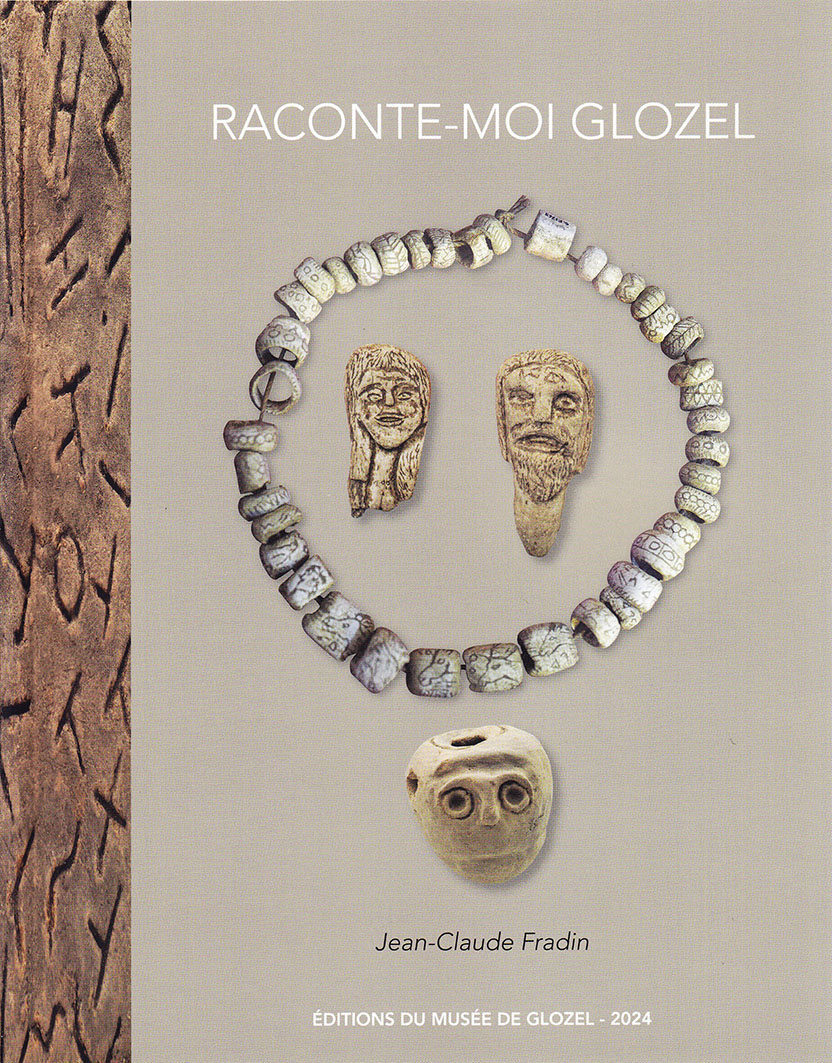
Pour l’occasion, Jean-Claude Fradin – le fils d’Émile – vient de publier une très belle brochure qui condense ces cent années de découvertes, de controverses, d’interrogations et autres événements à rebondissements, dignes souvent d’une série policière. Les nombreuses illustrations – photos anciennes et récentes, reproductions de cartes postales et bien sûr d’objets exposés dans le musée – viennent compléter un texte enlevé, ponctué de témoignages d’acteurs de la grande époque, tels les archéologues Salomon Reinach et Charles Depéret, l’épouse d’Émile Fradin Marie-Thérèse Côte, et bien sûr Émile Fradin. Les dernières pages reprennent l’historique de l’affaire de Glozel en bande dessinée, BD qui avait paru dans le Journal Tintin et dont j’avais eu le plaisir réaliser le scénario. J Jean-Claude Fradin, Raconte-moi Glozel, Éditions du Musée de Glozel, 2024. – 63 pages richement illustrées. 12 euros, hors frais d’envoi. En vente au Musée ou par envoi postal. Pour toute commande ou tout autre sujet, rendez-vous sur la page Contact du site web du musée de Glozel. 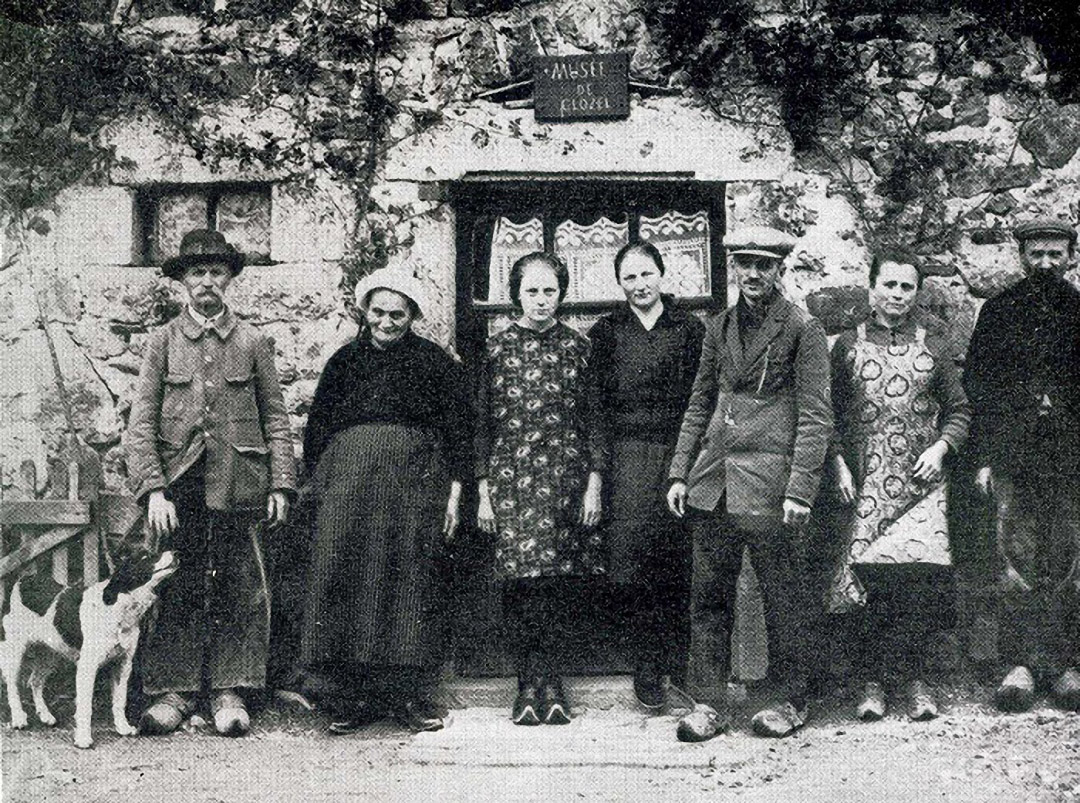
La famille Fradin en 1928. De gauche à droite : Claude le grand-père, Émilie la grand-mère, Marcelle et Yvonne, sœurs d’Émile, Émile, Françoise la mère et Antoine le père.
|
|
Le centenaire de Glozel |
24 février 2024 |
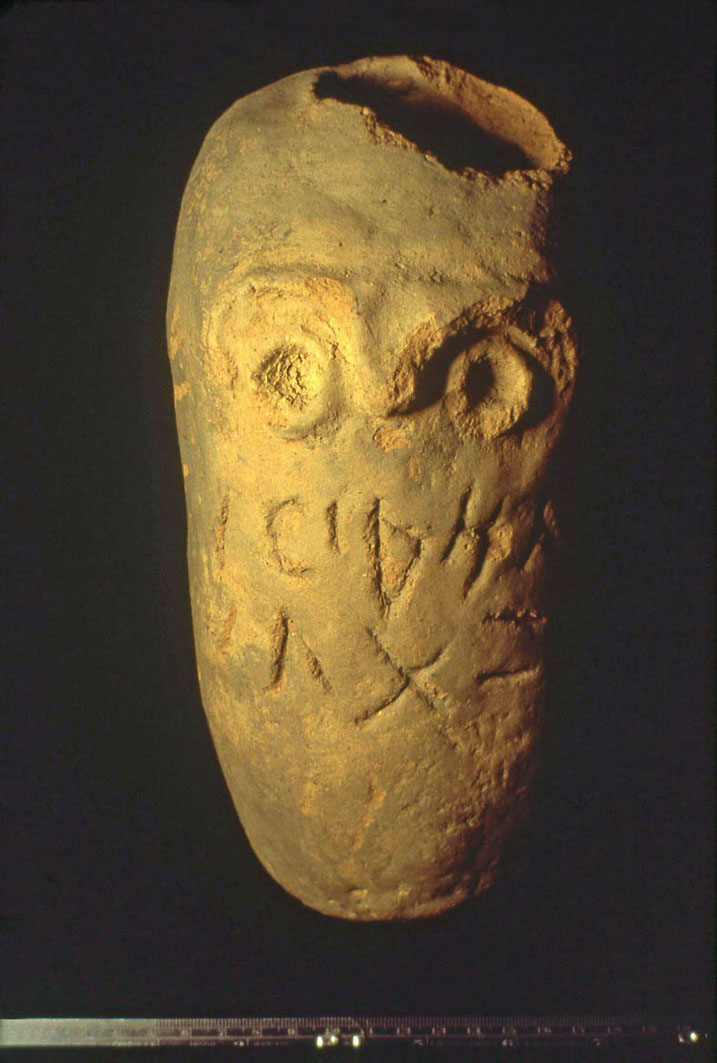
Ainsi que le savent nos plus anciens lecteurs, nous avons suivi de près ce que l’on a appelé « l’affaire de Glozel1 » dès le lancement de Kadath ; et plus précisément depuis la parution, en mars 1974, d’un numéro « Spécial Glozel » (Kadath n° 7, disponible sur demande). Au fil des années, nous sommes revenus régulièrement sur ce sujet aussi passionnant que controversé, informant nos lecteurs de l’évolution de la recherche, aussi bien sur le terrain qu’en laboratoire – nos plus récentes publications sont disponibles en téléchargement en cliquant ici. C’est donc avec grand plaisir que nous pouvons aujourd’hui annoncer la tenue d’une série de manifestations, organisées pour le centième anniversaire de la mise au jour, le 1er mars 1924, des premiers objets par Émile Fradin, alors jeune laboureur de son état et héros principal de la saga glozélienne. Voici un premier aperçu des festivités prévues en cette année du centenaire. Il s’agit encore d’un calendrier provisoire, qui devra être affiné dans les prochaines semaines. Bien entendu, nous vous tiendrons informés. 1er mars : journée de lancement
• Ouverture du musée et inauguration à 15h avec la famille Fradin, le président de Vichy Communauté et le maire de Ferrières-sur-Sichon2. Mai 2024 Bus des Mémoires de la compagnie Procédé Zèbre dans le cadre du festival Water is memory, de Fabrice Dubusset : bus spectacle, voyage de Vichy à Glozel en après-midi (2h30 de trajet) les 8 et 9 mai. Juin 2024 (ou septembre) Visites du musée pour les écoles primaires et collèges de l’agglomération : accueil au musée à partir du lundi 10 juin. Week-end des 6 et 7 juillet Animations à Ferrières-sur-Sichon et à Glozel : visite du musée, visite théâtralisée, photo-booth, exposition devant le musée de voitures anciennes des années 1920, projection de films, jeux immersifs sur le thème de Glozel, buvette, repas jambon à la broche puis soirée dansante le samedi à Ferrières. Troisième week-end de septembre Journées européennes du patrimoine : « Glozel objet du patrimoine ». Décembre Colloque sur « la place de Glozel dans l’histoire de l’archéologie française et la controverse de Glozel dans le contexte des années 20 », au Pôle Universitaire Lardy à Vichy. Visite du musée. 1 Le site de Glozel est situé en France, à une vingtaine de kilomètres de Vichy. 2 La commune dont dépend le hameau de Glozel. 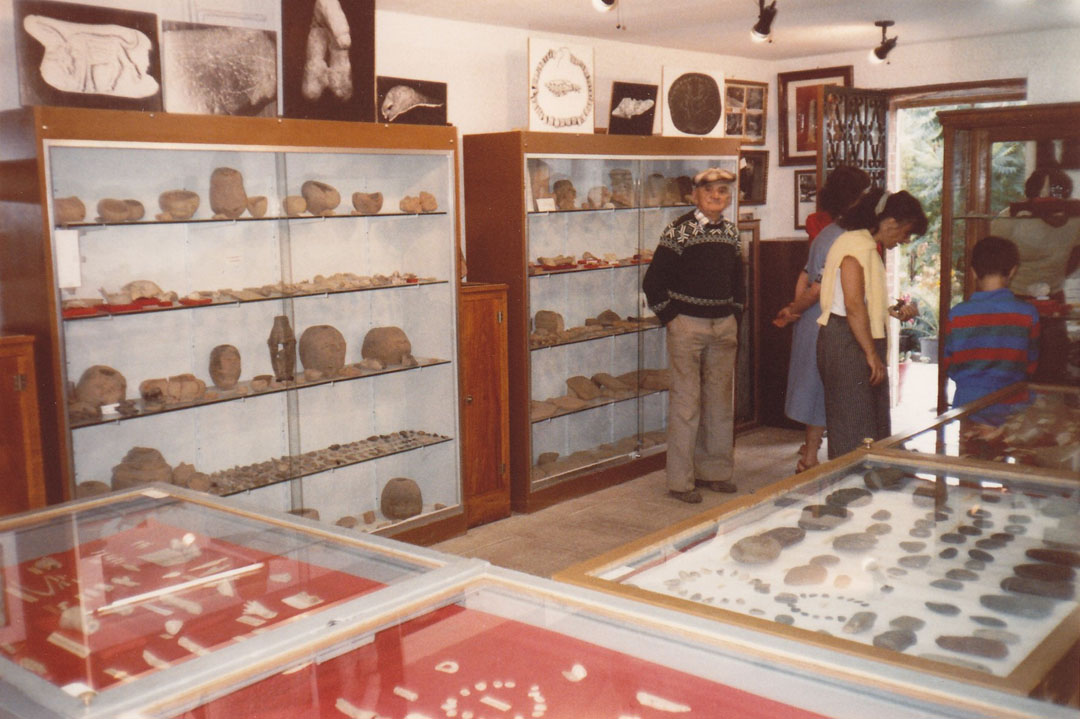
Le musée de Glozel (en 1988), installé dans une pièce de la ferme d’Émile Fradin, ici coiffé de sa casquette. (Photo Jacques Gossart) |
|
Nouvelle publication en ligne : Voyage de l’Arabie heureuse |
23 février 2024 |
Mots-clés : Paradis originel / reine de Saba / art rupestre / Dilmun / Hégra. Pour accéder à nos publications, cliquez ici. |
|
 Dès l’antiquité se forge le mythe de «
Consultez également ‘Archives’ pour prendre connaissance des infos plus anciennes |
|