Nos publications : les articles
Fondeurs et héros civilisateurs |
Octobre 2026 |
|
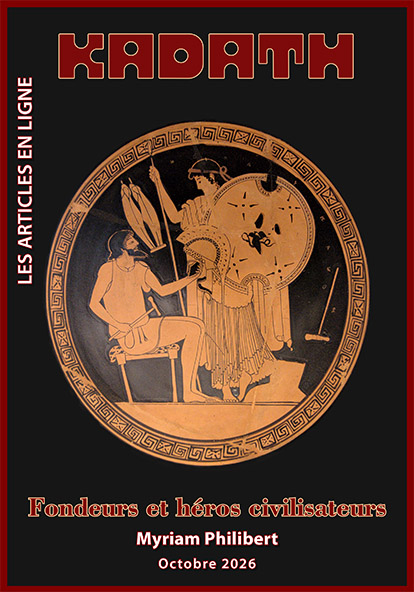 |
L’invention du métal fut-elle un choc sociétal probant ? Si archaïque soit-elle, la découverte du feu dévoile le Héros. Avec le néolithique, celui-ci devient civilisateur. Les rites du feu supposent l’émergence du sacerdoce, avec le roi solaire, bâtisseur et fondateur de cité, et du maître du feu, des mines et de la forge. Apparaissent le métal et la guerre. Combattants, roues, armes sont déifiés. Un gigantisme monumental rend gloire aux dieux. Monstres et dragons surgissent des abysses. Le forgeron se taille une mauvaise réputation, dans sa quête de l’immortalité. Une nouvelle sacralité prend vie. Des sanctuaires voient le jour, montagnes couvertes de gravures, enclos cosmiques, tours nuragiques, sépultures faramineuses pour défunts prestigieux. Chaque classe sociale a son héros, et ses mythes. |
 |
|
Was the invention of metal a transformative social upheaval? As ancient as it may be, the discovery of fire reveals the Hero. With the Neolithic age, this figure becomes a civilizing force. The rites of fire entail the emergence of a priesthood, embodied in the solar king, builder and founder of cities, and in the master of fire, mines, and the forge. Metal and warfare make their appearance. Warriors, wheels, and weapons are deified. Monumental grandeur glorifies the gods. Monsters and dragons emerge from the abyss. In his quest for immortality, the blacksmith acquires a sinister reputation. A new form of sacredness comes into being. Sanctuaries arise: mountains covered with engravings, cosmic enclosures, nuragic towers, and colossal burial monuments for distinguished dead. Every social class has its own hero, and its own myths. |
|
Myriam Philibert, Fondeurs et héros civilisateurs. Mots-clés : feu / métal / héros civilisateur / monstres / forgeron / mythes solaires. |
Écrire avec des cordelettes torsadées, la fonction scripturale des quipus andins |
Juin 2026 |
|
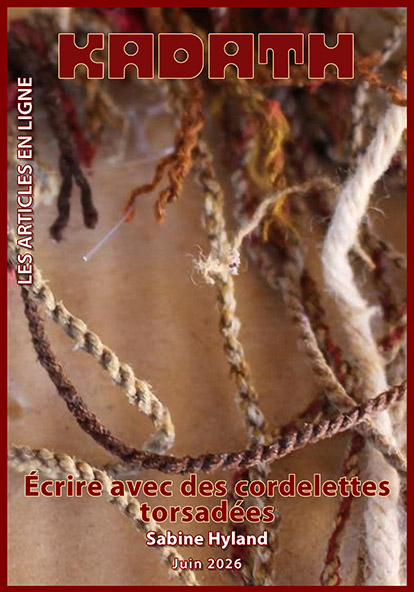 |
C’est en 2015 que Sabine Hyland, anthropologue reconnue à l’international pour ses travaux sur les quipus andins, a eu l’occasion d’étudier deux quipus préservés par les autorités locales d'un village péruvien. Selon les villageois, ces quipus sacrés relatent des épisodes de guerre sous forme de lettres. L'analyse montre que ces documents comportent 95 symboles distincts, un nombre qui les rapproche des systèmes d'écriture logosyllabiques. Une telle complexité suppose l'existence d'un système d'écriture, probablement logosyllabique, remettant en question l’hypothèse classique selon laquelle les quipus seraient de simples aide-mémoire servant uniquement à noter des chiffres. |
|
|
It was in 2015 that Sabine Hyland, an anthropologist internationally recognized for her work on the Andean khipus, had the opportunity to study two khipus preserved by the local authorities of a Peruvian village. According to the villagers, these sacred khipus recount episodes of war in the form of letters. The analysis shows that these documents contain 95 distinct symbols, a number that brings them closer to logosyllabic writing systems. Such complexity presupposes the existence of a writing system, probably logosyllabic, challenging the classic hypothesis according to which khipus are simple memory aids used only to note numbers. |
|
Sabine Hyland, Écrire avec des cordelettes torsadées, la fonction scripturale des quipus andins. Mots-clés : ayllu / cayte / Collata / écriture logosyllabique / inca / quechua / quipu. |
Le chamanisme, vogue ou renouveau ? |
Janvier 2026 |
|
 |
On assiste à un renouveau du chamanisme. Pourquoi remettre en vogue une pratique issue du fonds des âges ? Qui est cet intrigant personnage ? En quête de contacts privilégiés avec la nature, mais également les mondes invisibles, il œuvre lors d’une mise en scène magistrale. Maître du vol magique, il vole, grâce aux lancinants battements de son tambour, de l’inframonde aux cieux gelés. Un esprit puissant est devenu son guide et l’a initié à une réalité marginale. Il entre en transe pour ravir les âmes égarées ou prosaïquement pour soigner un corps en souffrance. Bref, voici un être hors du commun qui a traversé les millénaires, que l’art des cavernes met à nu et qui suscite toujours l’engouement. |
|
|
We are witnessing a revival of shamanism. Why bring back a practice from the depths of ancient times? Who is this intriguing figure? In search of privileged connections with nature, but also with the invisible worlds, he works during a masterful performance. A master of magical flight, he soars, thanks to the rhythmic beats of his drum, from the underworld to the frozen skies. A powerful spirit has become his guide and initiated him into a marginal reality. He enters trance to captivate lost souls or, more prosaically, to heal a suffering body. In short, here is an extraordinary being who has traversed millennia, laid bare by cave art, and who continues to spark fascination. |
|
Myriam Philibert, Le chamanisme, vogue ou renouveau ? Mots-clés : chaman / vol magique / esprits guides / tambour / Harappa / art des cavernes. |
La Grande Déesse de l’Indus |
Décembre 2025 |
|
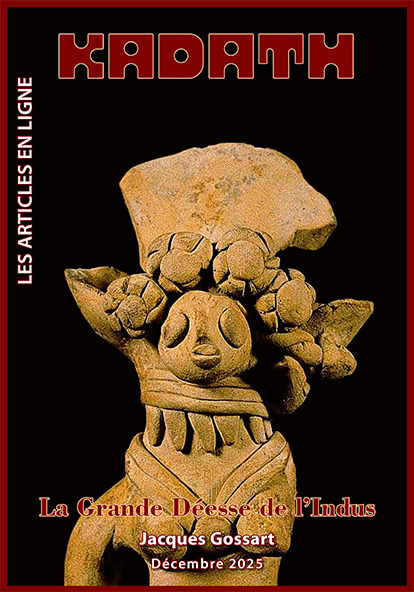 |
Cet article traite d’un point particulier de l’histoire de la civilisation de l’Indus, à savoir sa religion. La civilisation de l’Indus (ou « harappéenne »), se développe dans le bassin du fleuve Indus. Elle s’épanouit pleinement vers 2600 avant l’ère commune et amorce son déclin au début du deuxième millénaire avant l’ère commune. Alors que les autres cultures du sous-continent indien peuvent être comparées à celles de l’Occident mégalithique, la civilisation de l’Indus présente toutes les caractéristiques d’une société hautement développée : urbanisation raffinée, activités commerciales à caractère international, arts d’une remarquable finesse, usage d’une écriture non encore déchiffrée. Pour ce qui est de sa religion, et quoique nos connaissances en la matière restent fragmentaires, on peut avancer que ses principaux éléments sont à la base de ce qui deviendra la religion hindoue. |
|
|
This article deals with a particular point in the history of the Indus civilization, namely its religion. The civilization of the Indus (or “harappean”), develops in the basin of the river Indus. It fully flourished around 2600 BC and began its decline at the beginning of the second millennium BC. While the other cultures of the Indian subcontinent can be compared to those of the megalithic West, the civilization of the Indus presents all the characteristics of a highly developed society: refined urbanization, commercial activities with an international character, arts of remarkable finesse, use of a handwriting not yet decoded. As for its religion, and although our knowledge in this field remains fragmentary, we can argue that its main elements are the basis of what will become the Hindu religion. |
|
Jacques Gossart, La Grande Déesse de l’Indus. Essai de reconstitution de la religion harappéenne. Mots-clés : apsara / Ārya / danseuse / Grande Déesse / Harappa / Indus / jaïnisme / Kālī / śakti / Shiva / Śiva / Veda. |
Mythes des peuples sans écriture |
Septembre 2025 |
|
 |
Intrigante question que celle des mythes premiers, des mythes qui ont traversé les âges, véhiculés par la tradition orale. À quelle époque espère-t-on faire remonter leur naissance ou leur émergence ? À l’homo sapiens ? Des concepts forts tels que la vie et la mort, l’homme et la femme, sont à l’origine de premiers questionnements. Matricielle, la caverne s’inscrit comme le lieu où l’on naît, vit et meurt. Que dire du peuple Animal dont la variété et la fougue sont source d’envoûtements ? Même sans aile, le cheval passe entre les mondes, alors que le mammouth s’impose comme pilier de la terre qu’il a sorti du chaos. Ils semblent tous émerger du « temps du rêve », issus d’un Autre monde, tout comme l’oiseau voleur du feu ou la femme surnaturelle. Ces esprits qui peuplent la nature finissent par acquérir le statut de divinités quand l’homme se sédentarise. C’est alors qu’il ressent la poignante nostalgie du Paradis où il vivait à l’origine. |
|
|
This is an intreguing topic, that of early primitive myths that have travelled through ages, carried by oral communication. At what period shall be expect to bring up their beginnings or their coming out ? The homo sapiens period? Concepts as strong as life and death, man and woman, have been at the origin of early interrogations. As a womb of manking, the cave stands at the place when one is born, lives and dies. What about the Animal people whose divesity and energy have birth to bewitchments. Even deprived of wrings, the horse is omnipresent through successive worlds, the mammouth assures itself as a pillar of the earth which it has drawned out of chaos. They all seen to emerge from Dream time, produced by Another world, like the bird that stole the fire or the myth of supernatural woman. Those spirits omnipresents in nature end in turning into admitted deities of life. It is the time when he experiences the painful nostalgia of the Paradise where he had lived at the beginning. |
|
Myriam Philibert, Mythes des peuples sans écriture. Mots-clés : mythes / caverne / homo sapiens / peuple Animal / rites. |
Salomon et la reine de Saba |
Août 2025 |
|
 |
Prenant le relais des travaux jadis présentés par Immanuel Velikovsky dans son livre Ages in Chaos (Le Désordre des siècles pour la version française), Damien F. Mackey propose ici de nouveaux éléments en faveur de l’hypothèse selon laquelle Hatchepsout, la pharaonne de la XVIIIe dynastie égyptienne, était en fait la reine de Saba biblique. L’argument principal avancé est la présence de Salomon lui-même, dans les inscriptions égyptiennes, sous l’identité de Sénènmout, l’éminence grise d’Hatchepsout. |
|
|
Taking up the work formerly presented by Immanuel Velikovsky in his book Ages in Chaos, Damien F. Mackey proposes here new elements in favor of the hypothesis according to which Hatshepsut, the pharaoh of the 18th Egyptian dynasty, was actually the biblical queen of Saba. The main argument put forward is the presence of Solomon himself, in Egyptian inscriptions, under the identity of Senenmut, the grey eminence of Hatshepsut. |
|
Damien F. Mackey, Salomon et la reine de Saba, traduit de l’anglais par Stéphane Normand. Mots-clés : Deir el-Bahari / Hatchepsout / Pount / reine de Saba / Salomon / Sénènmout / Solon / Velikovsky. |
Le site de Hartashen, un espace sacré ? |
Mai 2025 |
|
 |
L’avenue mégalithique de Hartashen se trouve en Arménie. Ce site mystérieux est composé de grands monolithes de pierre qui sont méticuleusement alignés à travers le paysage en épousant le bord de la rivière Khish-Khish. Hartashen est situé dans la région de Shirak, à 33 km de Gyumri, deuxième grande ville d’Arménie après la capitale Erevan. Il présente une série de trois rangées de mégalithes s’étendant sur environ 600 m, chacune composée de plus de 200 mégalithes. Serait-il un chemin cérémoniel, un ancien observatoire, ou quelque chose de tout à fait différent ? Ce n’est que récemment que le site a fait l’objet d’études scientifiques, et la véritable fonction de Hartashen reste enveloppée de mystère. Les mythes cosmogoniques pourraient donner la clé de ces questions. |
|
|
The megalithic avenue of Hartashen is located in Armenia. This mysterious site is composed of large stone monoliths that are meticulously aligned across the landscape by marrying the edge of the Khish-Khish river. Hartashen is located in the region of Shirak, 33 km from Gyumri, the second largest city in Armenia after the capital Yerevan. It presents a series of three rows of megaliths extending for about 600 m, each consisting of more than 200 megaliths. Would it be a ceremonial path, an ancient observatory, or something quite different? The site has only recently been the subject of scientific study, and the true function of Hartashen remains shrouded in mystery. Cosmogonic myths could give the key to these questions. |
|
Lousine Terteryan : Le site de Hartashen, un espace sacré ? Un casse-tête archéologique et historique. Mots-clés : Hartashen / mégalithes / alignements / Carnac / Merrivale / mythe cosmogonique / vénération de pierre. |
Continuité du substrat dans la religion et l’iconographie indo-européennes |
Mars 2025 |
|
 |
Cet article traite de la possible persistance des figures féminines, de nature religieuse ou non, ainsi que de leur iconographie d’accompagnement, découvertes parmi les artefacts de la culture de la vallée de l’Indus*, en comparaison avec les textes et l’iconographie trouvés dans les cultures postérieures de l’Inde, dont la superstrate indo-européenne. L’autrice examine l’iconographie des sceaux représentant des figures féminines et félines, sceaux mis au jour dans la vallée de l’Indus et dans les textes indiens tels que le Devīmāhātmyam. Sont également examinées des « figures d’exhibition » féminines de la vallée de l’Indus et des figures indiennes de « Lajjā Gaurī », datant des premiers siècles de cette époque et trouvées dans les temples situés en Inde. * Sur cette culture, voir les articles en ligne déjà publiés par Kadath. |
|
|
This article deals with the possible persistence of female figures, religious or not, and their accompanying iconography, discovered among artifacts of the culture of the Indus Valley*, in comparison with texts and iconography found in later cultures of India, including the Indo-European superstrate. The author examines the iconography of seals representing female and feline figures, seals discovered in the Indus valley and in Indian texts such as the Devīmāhātmyam. Also examined are female “display figures” from the Indus Valley and Indian “Lajjā Gaurī” figures from the early centuries of this era found in temples located in India. * On this culture, see the online articles already published by Kadath. |
|
Miriam Robbins Dexter : Continuité du substrat dans la religion et l’iconographie indo-européennes, Sceaux et figurines de la culture de la vallée de l’Indus et figures féminines indiennes historiques.
Mots-clés : chamanisme / cornes / Devī / Devīmāhātmyam / Durgā / félin / féminin / figuier / Ghaggar-Hakra / Harappā / Indus / Lajjā Gaurī / |
Les Ligures, peuple mythique ? |
Janvier 2025 |
|
 |
Le trophée des Alpes au-dessus de Monaco marque la fin de la Ligurie provençale antique et de la Celtique (Gaule). Depuis longtemps, la Ligurie italienne est devenue IX Regio de la République romaine. Débute alors le questionnement sur les mystérieux Ligures ou Ligyens, dont les territoires se réduisent maintenant à peau de chagrin, alors qu’ils avaient colonisé tout le sud de la France et un quart de l’Italie. Quelques noms, comme les Salyens voisins de Marseille, demeurent et intriguent. Les mots insaisissables d’une langue intraduisible interpellent. Des substructions se dressent sur des sommets vertigineux, les « castellaras » imprenables. Que sait-on vraiment des Ligures, peuple inconnu dont les origines, mythiques, se perdent au néolithique sur les rives de la Méditerranée ? Doit-on oublier une prétendue association « celto-ligure » et classer ce groupe linguistique parmi les langues pré-indoeuropéennes ? |
|
|
The Trophy of the Alps above Monaco, marks the end of ancient Ligurian Provence and that of Celtic territories. For a long time, the Italian Liguria became the IX Regio of the Roman Republic. Thereafter, began the pondering upon the mysterious Ligurians or Ligyes, whose former territories are now reduced to skin and bones, even though they had once colonized the entire south of France and a quarter of Italy. A few names, such as the Salyes who lived near Marseille, dwell in time and intrigue. The elusive words of an untranslatable language call out for attention. Substructures rise on vertiginous peaks, the impregnable “Castellaras”. What do we really know about the Ligurians, an unknown people whose mythical origins are lost in Neolithic times by the shores of the Mediterranean Sea? Should we forget a supposed “celto-ligurian” association and classify this linguistic group among pre-Indo-European languages? |
|
Myriam Philibert, Les Ligures, peuple mythique ? Mots-clés : ethnie / territoires ligyens / linguistique / castellaras / taureau sacré. |
Il était une fois un chien mythique : Gamp’r ou Garmr ? |
Novembre 2024 |
|
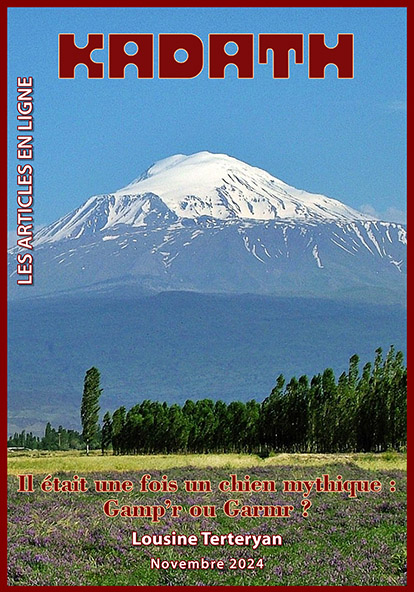 |
Deux personnages mythiques, appartenant à deux cultures et époques différentes, ont des noms fort approchants : Garmr ou Garm pour le premier, Gamp’r pour le second. Garmr relève de la mythologie nordique, Gamp’r de l’arménienne. Mais serait-il possible qu’il existe une ressemblance autre que phonétique entre ces deux créatures ? Gamp’r est assez connu, en tant qu’espèce de chien et comme personnage légendaire ; ce qui n’est pas le cas pour Garm, qui n’est mentionné qu’une seule fois dans les sources de légendes et mythes nordiques. Dans plusieurs langues indo-européennes, le mot pour désigner le chien a également le sens de loup. Dans les croyances de ces peuples, le chien possède deux incarnations : lié à la mort, il incarne le mal et est représenté en noir ; lié à la vie et à la résurrection, il incarne le bien, et est représenté en blanc. L’article passe en revue et compare les représentations légendaires de ces chiens, abordant les ressemblances de Gamp’r et de Garm selon deux angles, à savoir l’étymologie du nom et l’idéologie du culte. |
|
|
Two mythical characters, belonging to two different cultures and eras, have very similar names: Garmr or Garm for the first one, Gamp'r for the second. Garmr is from Nordic mythology, Gamp'r from the Armenian. But is it possible that there is a similarity other than phonetic between these two creatures? Gamp'r is quite well known, as a dog species and as a legendary character; this is not the case for Garm, who is mentioned only once in the sources of Nordic legends and myths. In several Indo-European languages, the word for dog also means wolf. In the beliefs of these peoples, the dog has two incarnations: linked to death, it embodies evil and is represented in black; linked to life and resurrection, it embodies good, and is represented in white. The article reviews and compares the legendary representations of these dogs, addressing the similarities between Gamp’r and Garm from two angles: the etymology of the name and the ideology of the cult. |
|
Lousine Terteryan, Il était une fois un chien mythique : Gamp’r ou Garmr ? Mots-clés : Garm / Gamp'r / chien / chien-ailé / Aralez / Valhalla / Ragnarök / premier animal domestique / inhumation pour chien / légendes indo-européennes / grogner. |
Dégradations climatiques en Chine antique et éruptions volcaniques |
Octobre 2024 |
|
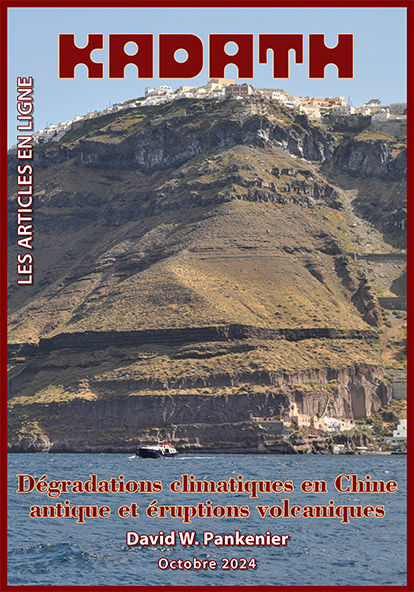 |
Le fait est bien connu que les anciennes archives écrites chinoises constituent une source inestimable de renseignements historiques concernant l'astronomie, la technologie, l'économie et le climat. Certaines d'entre elles remontent au deuxième millénaire avant notre ère. De nombreuses études ont établi que les conséquences de l'éjection dans l'atmosphère d'aérosols volcaniques est susceptible d'avoir un impact majeur sur le climat de toute la planète. Les éléments de preuve, d'origine chinoise, d'une anomalie climatique de ce type dans les années 530 sont d'abord examinés dans cet article. Ces éléments indiquent plus d'une éruption volcanique massive au cours de cette décennie, bien qu'on ne sache pas encore de façon sûre quel volcan en a été le lieu. De manière plus sévère encore qu'en 1815, « l'année sans été » due à l'éruption du Tambora, en 536-537 des gelées estivales et des chutes de neige se produisirent en Chine et causèrent une sécheresse de plusieurs années, de mauvaises récoltes et une famine désastreuse. En outre, l'étude de textes de l'époque pré-impériale confirme l'hypothèse selon laquelle, au milieu du deuxième millénaire avant notre ère, un déchargement massif dans l'atmosphère d'aérosols volcaniques provenant de l'éruption de Théra (Santorin) aurait pu causer la spectaculaire dégradation climatique du seizième siècle AEC. Une datation des événements fondée sur des archives vérifiables ayant consigné des phénomènes astronomiques suggère que cette calamité, qui resta longtemps dans les mémoires, aurait pu être causée par l'éruption à Théra, en Méditerranée orientale(*). Cette date de référence peut nous aider à établir une chronologie fiable des royaumes de cette région, à cette époque. |
|
|
It is well known that ancient Chinese written records are an invaluable source of historical information on astronomy, technology, economy, and climate, dating back in some cases to the second millennium BCE. Numerous studies have established that the climatic consequences of the ejection of volcanic aerosols into the atmosphere can have a major impact on the climate worldwide. Here, the Chinese evidence of such a severe climatic anomaly during the decade of the 530s is first reviewed. These indicate more than one massive volcanic eruption during this decade, although which volcano was responsible has not yet been conclusively established. Even more severe than 1815, the “year without a summer,” due to the eruption of Tambora, in 536–537 summer frosts and snowfall occurred in China causing multiyear drought, crop failures, and catastrophic famine. Study of pre-imperial Chinese texts gives reason to believe that in mid-second millennium BCE a massive loading of the atmosphere with volcanic aerosols from the eruption of Thera (Santorini) may have been the cause of dramatic climatic downturn in the sixteenth century BCE. Dating of the events based on verifiable records of astronomical phenomena suggests that the long-remembered ancient calamity could have been caused by the eruption of Thera in the eastern Mediterranean(*). This benchmark date can be helpful in establishing a secure chronology of eastern Mediterranean kingdoms in the period. |
|
David W. Pankenier, Les dégradations climatiques en Chine causées par des éruptions volcaniques en 535-40 EC, ainsi que par celle de Théra (Santorin) comme événement inaugural de la dynastie Shang (1562 AEC), traduit de l’anglais (américain) par Stéphane Normand. Mots-clés : chronologie / anomalies climatiques / début de l'histoire chinoise / Théra / éruptions volcaniques / années sans été. (*)
|
Le Déluge de Manu |
Septembre 2024 |
|
 |
Sans être universel, le thème du Déluge est couramment abordé dans les mythologies. Il n’est donc pas étonnant que le récit diluvien soit également présent dans la mythologie indienne. On y découvre l’histoire de l’Homme Primordial Manu et du poisson Matsya, dont la version la plus connue constitue un épisode du Mahābhārata. Au terme d’une découverte des différentes déclinaisons du récit, l’article tente de répondre à une série d’interrogations : quelle est la signification de ce mythe ? s’agit-il d’une création locale ? ou s’agit-il d’un emprunt, et dans ce cas, à qui ? En conclusion d’une analyse des différents éléments du mythe et de ses rapports avec d’autres récits diluviens, l’auteur propose une trame synthétique en trois points, retraçant les tenants et aboutissants de la vision indienne du Déluge. |
|
|
Although not universal, the theme of the Flood is commonly addressed in mythologies. It is therefore not surprising that the story of the flood is also present in Indian mythology. The story of the Primordial Man Manu and the fish Matsya is read therein, the best known version of which is an episode of the Mahābhārata. After discovering the different versions of the story, the article attempts to answer a series of questions: what is the meaning of this myth? Is it a local creation? or is it borrowed, and if so, to whom? In conclusion of an analysis of the different elements of the myth and its relations with other diluvian narratives, the author proposes a synthetic pattern in three points, tracing the ins and outs of the Indian vision of the Flood. |
|
Jacques Gossart, Le Déluge de Manu : Le mythe du Déluge dans l’Inde antique, et ses rapports avec d’autres mythes diluviens. Mots-clés : Déluge / Inde / Manu / Matsya / mythologie / poisson / Bhāgavatapurāṇa / Mahābhārata / Mānavadharmaśāstra / Matsya-purāṇa / Śatapathabrāhmaṇa. |
Neandertal et le symbole |
Juin 2024 |
|
 |
Neandertal qui est-il ? Notre vague cousin ? Un lointain ancêtre qui nous a légué quelques gènes ? Le premier artiste ? Les uns le rabaissent et le relèguent aux origines de l’humanité ; les autres recherchent avec passion tous les signes qui font de lui un être proche de nous. Sur le plan technique, il a su apporter à l’Homo sapiens certains procédés. Son processus conceptuel offrait une relative richesse, ce qui s’est traduit par une force d’identité livrée au travers de parures surprenantes, par une approche souvent grandiose de la mort, ou des cérémonies, des rites, des cultes qui se déroulaient dans les profondeurs enténébrées des grottes. Enfin, à travers un art schématique, il a eu accès au symbolisme. |
|
|
Myriam Philibert, Neandertal et le symbole. Mots-clés : Neandertal / symbolisme / feu / parure / art / rites et cultes. |
Les sons de l’histoire |
Avril 2024 |
|
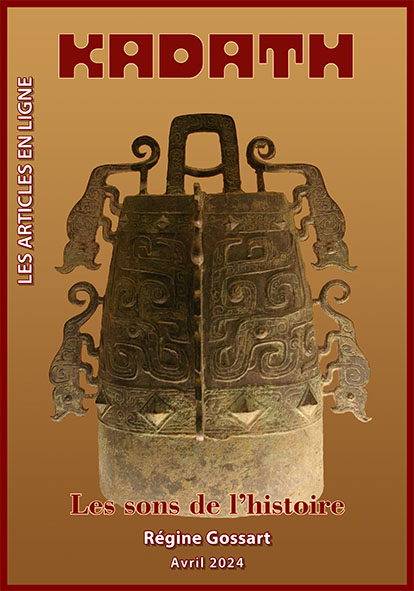 |
Depuis le premier cri jusqu’au dernier souffle, le son fait partie de la vie des humains. Produit ou entendu, il a un impact profond sur le fonctionnement somatique ainsi que sur le développement psycho-affectif. Outil de communication, il participe aussi à la cohésion et à l’identité groupale. |
|
|
Régine Gossart, Les sons de l’histoire : Hypothèses sur la connaissance et l’utilisation du son dans la préhistoire et l’histoire. Mots-clés : archéologie acoustique / pouvoir des sons sur le corps et le psychisme / dimension sociale du monde sonore / sons et préhistoire. |
Voyage de l’Arabie heureuse |
Février 2024 |
|
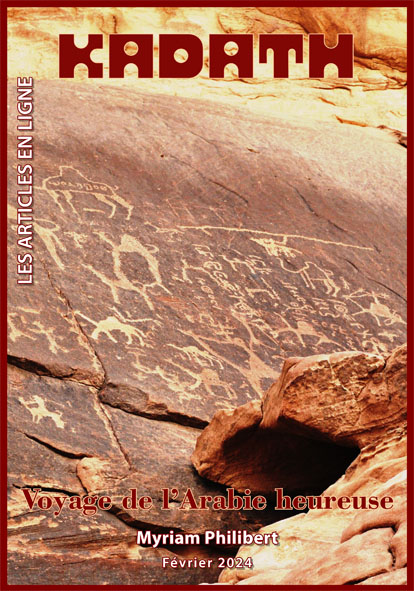 |
Dès l’antiquité se forge le mythe de « l’Arabie heureuse ». Étrange qualificatif ! Est-ce en ce désert qu’a fleuri, en des temps immémoriaux, le jardin d’Éden ? Est-ce le lieu secret où se dissimule la mystérieuse Dilmun vantée par la poésie sumérienne ? Est-ce l’évocation des mirobolants trésors de la reine de Saba, encens, myrrhe, perles, aromates, véhiculés sur des pistes caravanières aussi dangereuses que dotées d’oasis fastueuses ? L’archéologie en dévoile une réalité fameuse, avec Camel Site, Hégra et ses rochers sculptés, ou Marib. |
|
|
Myriam Philibert, Voyage de l’Arabie heureuse. Mots-clés : Paradis originel / reine de Saba / art rupestre / Dilmun / Hégra. |
Le réveil de deux amoureux mythiques |
Décembre 2023 |
|
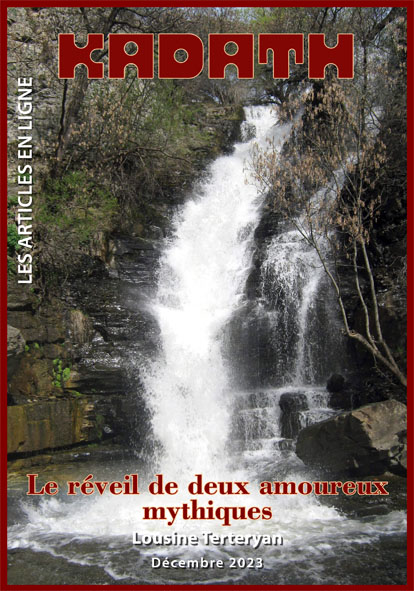 |
Deux œuvres de la littérature arménienne, séparées de plusieurs millénaires, décrivent le phénomène du lever de soleil à peu près de la même manière. L’un des poèmes date de l’antiquité, l’autre du Moyen Âge. Le premier est intitulé Naissance de Vahagn, le second Ode à Vardavar. |
|
|
Lousine Terteryan, Le réveil de deux amoureux mythiques. Analyse de deux poèmes de la mythologie arménienne Mots-clés : Arménie / Astghik / aube / soleil / Vahagn / Vardavar / vénération des plantes, de l’eau et de la fertilité / Vénus. |
L’inclinaison des pyramides égyptiennes |
Octobre 2023 |
|
 |
L’objectif de cette étude est la découverte des raisons d’ordre astronomique expliquant l’orientation des pentes des pyramides utilisées comme tombeaux de pharaons dans l’Égypte antique. Cet article contient les résultats de l’analyse statistique du changement d’inclinaison des pentes pyramidales (3e et 2e millénaires AEC) en fonction de leur date de construction. Sur la base des résultats obtenus, il a été conclu que le changement annuel moyen de l’angle des pentes des pyramides était proche de la valeur de la précession des équinoxes. Les côtés étaient dirigés vers le soleil à son point culminant, mais un jour spécifique était choisi pour cette procédure grâce au lever achronique de certaines étoiles après l’équinoxe d’automne. |
|
|
Stanislav Arkadievich Grigoriev, L’inclinaison des pyramides égyptiennes et l’appropriation de l’essence divine Mots-clés : pyramides / Égypte antique / inclinaison des côtés / orientations stellaire et solaire / cultes d’Osiris et d’Horus. |
La dalle de Saint-Bélec, une curiosité cartographique ? |
Septembre 2023 |
|
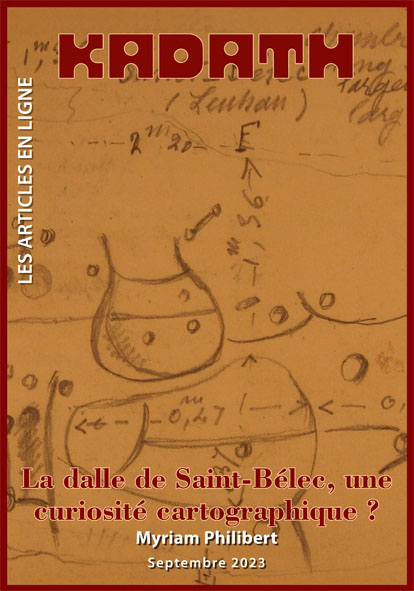 |
La dalle de Saint-Bélec (Finistère, France) : la plus ancienne des cartes connues à ce jour ? De temps à autre, des trouvailles sensationnelles émergent du quotidien pour épater le public. Faut-il se prêter à ce jeu et voir un petit coin d’Armorique dissimulé dans les graphismes gravés sur ce bloc daté des débuts de l’âge du bronze ? Comment l’homme de cette époque appréhendait-il son territoire ? Que fut la destination initiale de ce monolithe réemployé dans un tertre funéraire ? Voilà autant de questions qui suscitent la controverse, mettant en émoi la communauté scientifique. Art symbolique et abstraction poussée régentent diverses « images du monde », tirées de l’oubli par le chercheur de vérité qui sommeille en tout archéologue. Faits et données s’accumulent. Apportent-elles la réponse espérée ? |
|
|
Myriam Philibert, La dalle de Saint-Bélec, une curiosité cartographique ? Mots-clés : Dalle / stèle / carte / territoire / image du monde. |
Les « drakospita » en Grèce |
Juin 2023 |
|
 |
Redécouvrons, en Eubée, les drakospita, maisons des dragons, dont l’origine légendaire dévoile la guerre des Dieux, des Géants et des Titans. Ces constructions « cyclopéennes », aux blocs colossaux qui ont défié le temps, et voûtées en encorbellement, semblent leur œuvre, alors que les Mycéniens en sont les vrais bâtisseurs. Leur civilisation s’implante durablement dans l’île, justifiant une tradition et une mythologie qui traversent les âges et nous interpellent encore aujourd’hui. |
|
|
Myriam Philibert, Les « drakospita » en Grèce. Mots-clés : Maison des dragons / architecture de pierres sèches / architecture cyclopéenne / mythologie mycénienne. |
Permanence des mythes et des figurations |
Mai 2023 |
|
 |
L’article s’interroge sur la permanence, à travers le temps et l’espace, de matrices de mythes, de contes, légendes et de symboles. Mais surtout, de leur caractère vivant jusque dans nos sociétés actuelles où la science semble pourtant avoir expliqué tous les mystères. |
|
|
Régine Gossart, Permanence des mythes et des figurations. Mots-clés : inconscient collectif, temps, mystère de la permanence, processus de symbolisation-représentation, besoin de compréhension et de mise en sens. |
Les Celtes et le temps |
Avril 2023 |
|
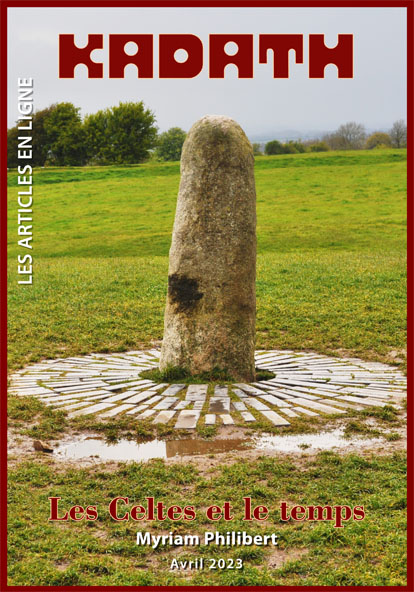 |
Les Celtes et le temps : voici une histoire si embrouillée que l’on peine à la décrypter et chacun donne son approche. D’équinoxe en solstice, d’Imbolc à Samain, défilent les mois et les fêtes. À force de triturer le calendrier gallo-romain de Coligny, la ronde des saisons s’emballe et l’on finit par atteindre l’intemporel ou saisir comment les héros gagnent l’éternité. Un temps linéaire conduit de la naissance à la mort. Et au-delà ? Des symboles sont axés sur la perpétuelle giration des astres autour de la Polaire et un temps cyclique. Des poèmes vantent des hommes qui changent d’apparences au fil des siècles, toujours aussi frais qu’au premier matin, défiant la mort pour conquérir l’Année et passer dans l’Autre monde. |
|
|
Myriam Philibert, Les Celtes et le temps. Mots-clés : temps, calendrier, fêtes celtes irlandaises, saisons, jour/nuit. |
La (possible) carte de la grotte de Tito Bustillo |
Mars 2023 |
|
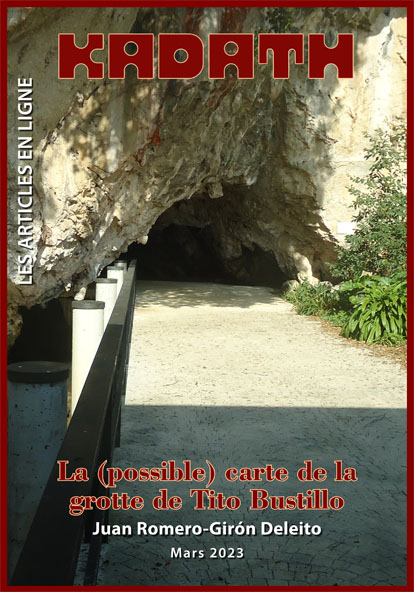 |
La grotte de Tito Bustillo est située sur la rive occidentale de l’embouchure du rio Sella, dans la province espagnole des Asturies. Elle est ornée de peintures d’animaux et de multiples signes remontant au Magdalénien. |
|
|
Juan Romero-Girón Deleito, La (possible) carte de la grotte de Tito Bustillo, traduction de Stéphane Normand. Mots-clés : art paléolithique, carte topographique, Magdalénien, peinture rupestre, Tito Bustillo. |
Les félins, la fonction apotropaïque et le « V » sacré |
Février 2023 |
|
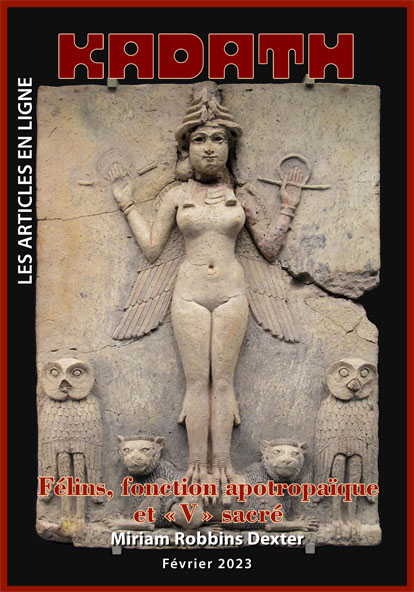 |
Ainsi que le laisse présager son sous-titre « Évolution des symboles associés aux figures féminines divines et magiques », cet article traite des figures féminines exhibitionnistes, c’est-à-dire des figures féminines montrant leurs organes génitaux, ceux-ci étant parfois représentés par un V. Ces représentations, éventuellement accompagnées de félins, expriment à la fois les aspects bénéfiques et féroces de la féminité divine. Figures apotropaïques, autrement dit, éloignant le mal, l’ennemi, elles sont protectrices du peuple auquel elles sont attachées. Elles gardent les lieux, apportent la fertilité et la bonne fortune. Ainsi, depuis la période la plus reculée du Paléolithique supérieur jusqu’aux grandes civilisations égyptienne, gréco-romaine, harappéenne et chinoise, en passant par les cultures néolithiques de Göbekli Tepe et de Çatalhöyük, les organes féminins ont de tout temps protégé les marges de l’espace sacré. |
|
|
Miriam Dexter, Les félins, la fonction apotropaïque et le « V » sacré, Évolution des symboles associés aux figures féminines divines et magiques, traduction de Stéphane Normand. Mots-clés : apotropaïque, déesse, félin, féminité, magie, organes génitaux. |
Au fil du Nil, Quelques nouvelles d’Égypte |
Décembre 2022 |
|
 |
Quoi de neuf en Égypte ? Cet article aborde deux sujets glanés dans la riche actualité égyptologique, avec d’abord une synthèse des recherches entreprises depuis bientôt vingt ans dans la pyramide du pharaon Khoufou, alias Kheops. Et depuis quelques années, ces recherches se sont accélérées, débouchant sur une découverte sensationnelle : un « Grand Vide » au cœur du monument. |
|
|
Jacques Gossart, Au fil du Nil, Quelques nouvelles d’Égypte. Mots-clés : pyramide, Kheops, Khoufou, Big Void, Seth, oryctérope. |
Aryens et Harappéens : frères jumeaux ou frères ennemis ? |
Novembre 2022 |
|
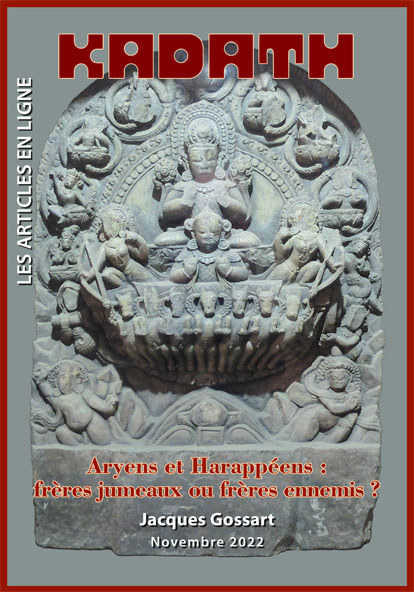 |
Les mouvements nationalistes à l’œuvre en Inde depuis de nombreuses années s’accompagnent de réécritures partielles de l’histoire du pays, dont l’affirmation d’une « Inde à l’origine de l’humanité ». C’est dans ce cadre que s’est développée l’hypothèse aryo-harappéenne. S’opposant à la théorie académique d’une invasion de l’Inde du Nord par des peuples indo-européens aryens au début du IIe millénaire avant l’ère commune, l’hypothèse aryo-harappéenne réfute la théorie d’une invasion, avançant que les Aryens sont les primo-habitants de l’Inde, et sont donc les glorieux ancêtres de la nation indienne. Ce sujet, esquissé précédemment par l’auteur dans une série d’essais parus dans Kadath*, est ici approfondi et enrichi des plus récentes découvertes en la matière. Outre un volumineux chapitre consacré au développement du nationalisme indien aux XIXe et XXe siècles, le présent article analyse en détail les arguments des uns et des autres, qu’ils soient défenseurs de l’invasion aryenne ou partisans de l’hypothèse aryo-harappéenne. |
|
|
Jacques Gossart, Aryens et Harappéens : frères jumeaux ou frères ennemis ? Quand archéologie et idéologie s’emmêlent Mots-clés : Aryen, ashvamedha, Aurobindo, cheval, dravidien, Harappa, Hindutva, Hyperborée, Indo-Européen, Mohenjo-daro, Sarasvati, Tilak, Thulé, Veda. (*) La civilisation de l’Indus et le mythe aryen, 2019-2020. |
Cernunnos et les divinités gauloises |
Septembre 2022 |
|
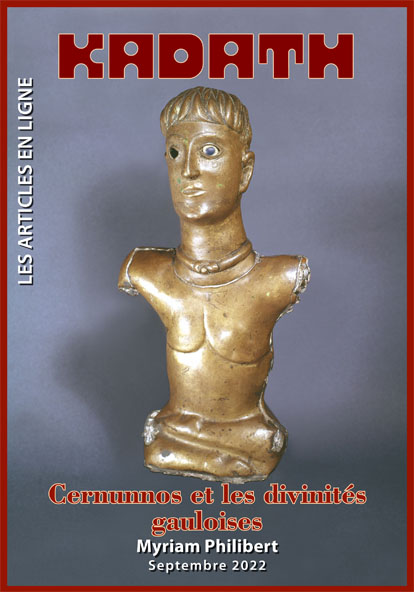 |
La langue gauloise recèle des trésors sur le plan onomastique, mais il ne faut pas croire pour autant que les Celtes avaient des dizaines de divinités. Des noms chantent à nos oreilles : le mystérieux Cernunnos, Taranis le coléreux, Belenos, Leucetios, qui brillent de tous leurs feux, Epona l’amazone, Grannos, Ogme le champion aux bizarres pouvoirs ou l’intrigant Esus armé d’une cognée. Certes, les qualificatifs sont multiples, mais c’est pour égarer l’adversaire. César lui-même s’est fourvoyé ou n’a pas tenté d’approfondir. Une déesse, omniprésente, glorifie la maternité, la fécondité, l’abondance et la lune. Elle envahit la nature, nixe ou sylphide ; elle trône sur un fauteuil d’osier, couronnée. Des dieux saisonniers se partagent l’année et la régence des saisons. Avec le temps et l’abondance de vocables, ils deviennent divinités topiques ayant la charge d’un petit lopin de terre. L’empire romain est passé par là, dénaturant une cosmogonie originale qu’il ne saisissait pas ! |
|
|
Myriam Philibert, Cernunnos et les divinités gauloises. Mots-clés : Cernunnos, Mater, Taranis, Belenos, Leucetios, langue gauloise. |
L’étymologie du toponyme Glozel |
Août 2022 |
|
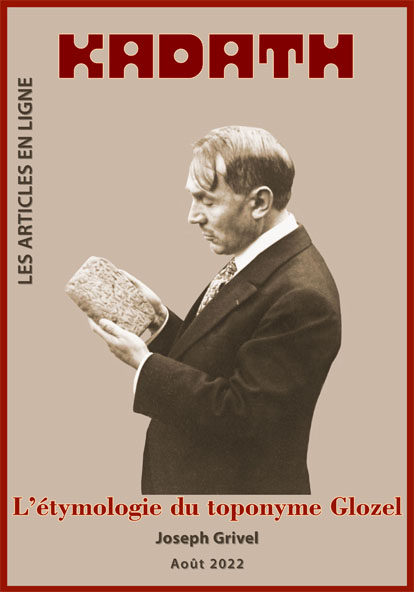 |
Dans les divers articles de Kadath que nous avons consacrés à Glozel depuis les années ‘70, nous avons déjà eu l’occasion de dire tout le bien que nous pensions des deux précédents livres de Joseph Grivel (La préhistoire chahutée. Glozel (1924-1941), 2003, et Glozel avant Glozel. Confins et sanctuaires, 2019). Nous persistons et signons ici, pour la circonstance de la parution de son dernier opus Le temps enfoui. Glozel après-guerre, paru en avril dernier. Outre la recension de ce troisième ouvrage, ce dossier consacré à Glozel propose un texte original de Joseph Grivel sur l’origine et l’ancienneté du nom Glozel. Peut-être futiles au premier abord, ces précisions complémentaires, loin d’être anodines, démontrent à suffisance jusqu’où peut se loger la mesquinerie dès lors qu’on s’ingénie à déprécier une découverte en attisant la polémique, ce que certains adversaires de l’authenticité du site n’ont pas manqué de faire, arguant que le Dr Morlet, fouilleur historique du site, aurait à dessein usé de cette graphie dans le but de conférer davantage de prestige aux trouvailles. |
|
|
Joseph Grivel, L’étymologie du toponyme Glozel. Mots-clés : Glozel, Morlet, Fradin, Champ des Morts, thermoluminescence, écriture. |
L’omphalos du monde, Göbekli Tepe |
Juin 2022 |
|
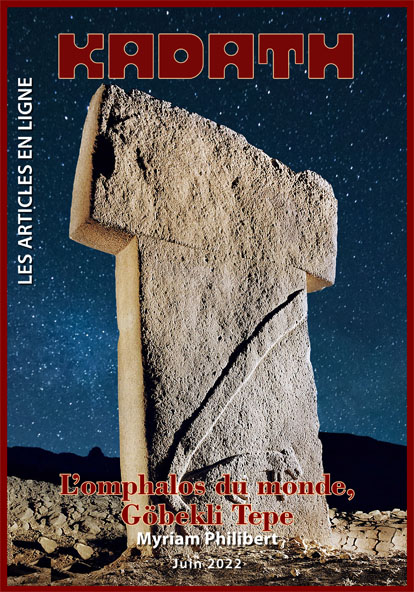 |
Göbekli Tepe (Turquie) est-il un espace-temps sacré, voire le plus ancien temple connu, ou une banale salle des fêtes pour chasseurs-cueilleurs du début de la période postglaciaire ? Depuis sa découverte dans les années 90, le lieu, qui épatait par sa datation – près de 12 000 ans –, s’est prêté à toutes les fantaisies interprétatives. Cet article fait le point sur les plus récentes découvertes et hypothèses relatives à Göbekli Tepe, et présente un panorama du riche contexte culturel et cultuel de cette région du monde, avec une visite aux sites emblématiques de Çayönü, Nevali Çori, Hallan Çemi, Asikli Höyük et Çafer Höyük. |
|
|
Myriam Philibert, L’omphalos du monde, Göbekli Tepe. Mots-clés : néolithique précéramique, enceinte mégalithique, piliers en T, bestiaire emblématique, Mère montagne. |
Sacrifices et sacrifice humain dans les civilisations anciennes |
Mai 2022 |
|
 |
Le sacrifice humain est, depuis les temps les plus reculés, un élément important des rituels religieux. Il est présent, à des degrés divers, dans toutes les grandes civilisations anciennes de l’Ancien comme du Nouveau Monde. Relativement marginal en Égypte pharaonique, en Mésopotamie et dans le monde celtique, il est au cœur des rites sanglants des peuples d’Amérique centrale. Il peut en outre, et selon les circonstances, répondre à des objectifs fort divers. Ainsi, alors qu’il est en lien direct avec le divin chez les Incas, il fait partie des pratiques funéraires d’aménagement de la vie post-mortem des dignitaires chinois. Au fil du temps, la plupart des rituels de sacrifice humain ont évolué vers des formes plus édulcorées, dont on retrouve la trace dans la mythologie et le folklore. |
|
|
Jacques Gossart, Sacrifices et sacrifice humain dans les civilisations anciennes. |
Les débuts de l’astronomie indienne |
Mars 2022 |
|
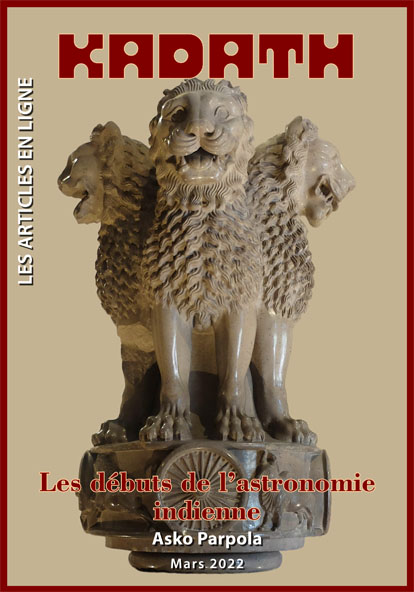 |
Quelle est l’origine de l’astronomie indienne ? S’est-elle développée localement ou, comme le pensent certains, trouve-t-elle sa source en Mésopotamie ? Quelle est sa relation à l’astronomie chinoise ? À ces questions, Asko Parpola, indologue de réputation mondiale et spécialiste de la civilisation de l’Indus, apporte des réponses inédites. Rejetant les hypothèses proposant une origine mésopotamienne aux calendriers védique et chinois(*), il fait remonter le calendrier stellaire indien aux premiers Harappéens, vers 3000 avant notre ère. Quant aux débuts de l’astronomie chinoise, ils peuvent être fixés à la fin du quatrième millénaire avant notre ère, et les similarités constatées entre l’astronomie de la Chine et de l’Inde sont probablement la résultante d’un développement parallèle convergent plutôt que d’une diffusion. |
|
|
Asko Parpola, Les débuts de l’astronomie indienne, en référence à un développement parallèle en Chine. (*) Les archives babyloniennes et assyriennes font remonter les observations astronomiques mésopotamiennes jusqu’au IIIe millénaire avant l’ère commune. Alors que la plus ancienne tablette astronomique, la « tablette de Vénus », date du XVIIe siècle AEC, les principales sources écrites sont l’ensemble Enuma Anu Enlil (deuxième millénaire AEC) et la tablette Mul.Apin (1100 AEC). |
Alphabet celte des arbres… et Stonehenge |
Janvier 2022 |
|
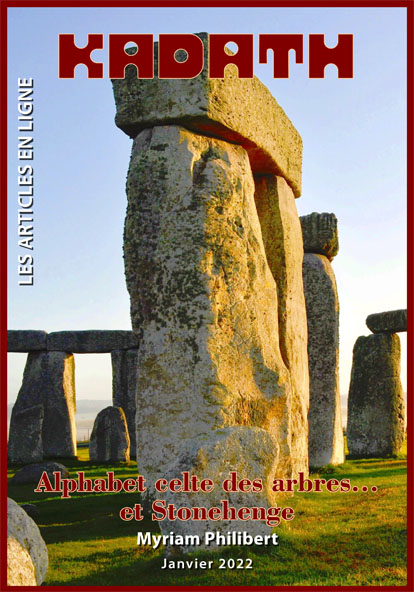 |
Le poète Robert Graves et deux chercheurs renommés, Gerald Hawkins et Aubrey Burl, nous ont lancé sur la piste d’un mystérieux calendrier, qui serait bien antérieur aux Celtes et remonterait au néolithique. Est-il alphabet ? Est-il Ogham ? Nul ne le sait. |
|
|
Myriam Philibert, Alphabet celte des arbres… et Stonehenge. Mots-clés : des arbres, alphabet des arbres, ogham, calendrier, Stonehenge. |
Selon l’ancien calendrier arménien, nous sommes en l’an 4513 |
Décembre 2021 |
|
 |
Troisième volet de notre dossier consacré à la civilisation arménienne, cet article aborde le sujet particulier du calendrier. Et, au-delà des caractéristiques propres à l’Arménie antique, cette étude est l’occasion d’examiner dans le détail les rapports qu’entretenaient les populations traditionnelles avec le temps. |
|
|
Lousine Terteryan, Selon l’ancien calendrier arménien, nous sommes en l’an 4513. Mots-clés : Haïk, calendrier solaire, Grande ère arménienne, Navasard, année religieuse, année économique, haut plateau arménien et astrologie, montre solaire. |
Visa pour Pount, le pays de l’encens |
Novembre 2021 |
|
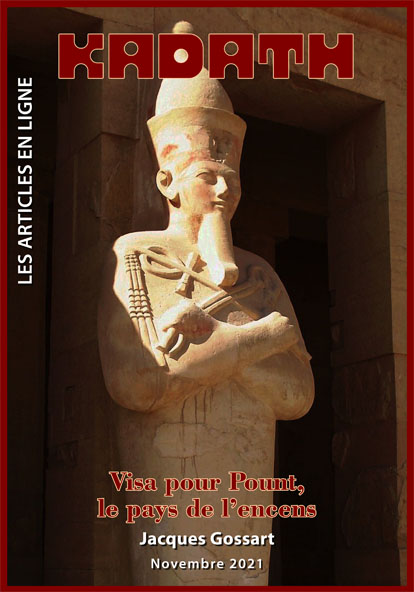 |
L’emplacement exact du pays de Pount – lieu de fructueux échanges commerciaux avec l’Égypte des pharaons – fait l’objet de vifs échanges entre égyptologues depuis que son nom a été déchiffré au XIXe siècle. Si la plupart des spécialistes tournent leurs regards vers les régions jouxtant la mer Rouge, d’autres chercheurs par contre voient plus loin, et jusqu’en Amérique. |
|
|
Jacques Gossart, Visa pour Pount, le pays de l’encens. Mots-clés : babouin, Deir el-Bahari, Égypte, encens, Hatchepsout, Pount. |
Île de Pâques : des crânes qui en disent long sur son passé |
Septembre 2021 |
|
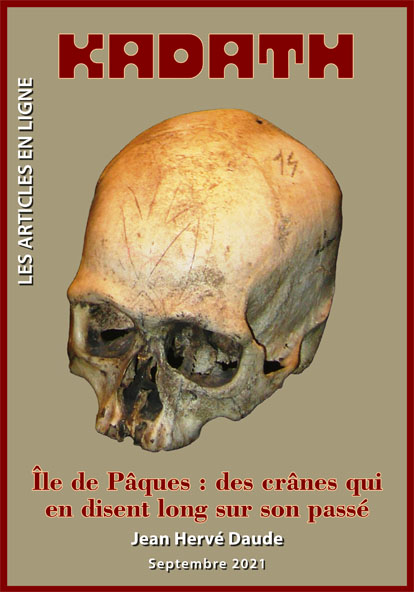 |
On s’attendrait à ce qu’une petite population vivant sur une île minuscule et complètement isolée présente des caractéristiques ostéologiques assez homogènes après plusieurs siècles de cohabitation. Or, tel n’est absolument pas le cas à l’île de Pâques. |
|
|
Jean Hervé Daude, Île de Pâques : des crânes qui en disent long sur son passé. Mots-clés : île de Pâques, crâne, ostéologie, mâchoire à bascule, Rapa Nui, Miru, Tupa hotu, Marama, Amérindiens, os des Incas. |
Karahunj, un bouquet de pierres sous le ciel |
Mai 2021 |
|
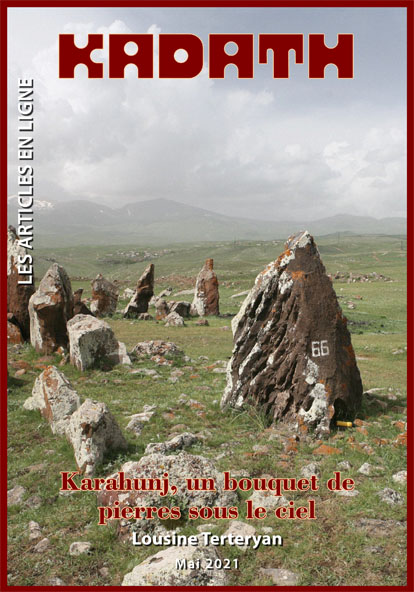 |
Il existe un site mégalithique en Arménie, nommé « Karahunj » (en arménien Քարահունջ), qui suscite un intérêt grandissant parmi les spécialistes. Ce monument a été comparé à d’autres lieux emblématiques tels que Carnac ou encore Newgrange, mais surtout à Stonehenge, Karahunj étant en effet identifié à un observatoire et à un lieu de culte solaire. Certains astronomes estiment que ce monument serait âgé de 6000 à 8000 ans, et daterait donc du IVe ou du VIe millénaire avant notre ère. Quoique des travaux y soient menés depuis une quarantaine d’années, le site est loin d’avoir livré tous ses secrets. |
|
|
Lousine Terteryan, Karahunj, un bouquet de pierres sous le ciel. Mots-clés : Karahunj, Stonehenge, observatoire, culte du soleil, pierres trouées, site mégalithique, Arménie, Sissian. |
Tradition celte : le druidisme |
Avril 2021 |
|
 |
Les Celtes, nos ancêtres fameux, mais dont la civilisation et surtout la tradition, occulte car fondée sur l’oralité, conservent de larges pans d’ombre, continuent à nous fasciner. Pourrons-nous faire la lumière sur le druidisme ? Volontiers énigmatique et empreint d’incertitudes, il ouvre des domaines infinis, allant de la science du chêne à la métaphysique, incluant monisme et polythéisme, de la symbolique poussée à l’extrême à une inénarrable mythologie, où les arbres s’affrontent au combat en rangs serrés, de la médecine conventionnelle à la magie cérémonielle ou talismanique, de l’appréhension du Sidh (Autre monde) à la connaissance intuitive de l’alphabet oghamique. Quand on embrassait la carrière, de longues et fastidieuses études dans des disciplines variées, pragmatiques ou spéculatives, s’imposaient. Il fallait se parfaire en chaque science avant de subir, au final, une initiation, pour prétendre au titre de vate (prophète), de barde (poète-musicien) ou de druide, sorte de super-savant en tout et pouvoir siéger, parmi ses pairs, lors des assemblées qui se réunissaient dans des clairières. |
|
|
Myriam Philibert, Tradition celte : le druidisme. Mots-clés : druide, chêne, chaudron, Ogham, Sidh. |
Les vichaps, l’énigme des mégalithes-dragons d’Arménie |
Mars 2021 |
|
 |
Connus sous le nom de vichaps (« dragon » en arménien), d’énigmatiques menhirs découverts en Arménie suscitent depuis un siècle l’intérêt des chercheurs. Apparus sur le territoire du haut plateau arménien aux alentours du IIIe millénaire avant J.-C., leur érection s’est poursuivie jusqu’au début du Ier millénaire avant notre ère. Cela dit, on ne connaît, ni la date exacte de leur apparition, ni leur âge précis. Conséquence de leur isolement, loin des zones habitées, aucune matière organique susceptible d’être datée par carbone 14 n’a en effet pu être recueillie. À cette difficulté s’ajoute le fait que ces mégalithes sont vierges d’inscriptions. Monuments religieux d’importance régionale majeure, tant du point de vue artistique que rituel, les vichaps conservent aujourd’hui tout leur mystère. Qui les a érigés, et pourquoi ? Quelles divinités incarnent-ils ? Autant de questions auxquelles cet article tente entre autres de répondre. |
|
|
Lousine Terteryan, Les vichaps, l’énigme des mégalithes-dragons d’Arménie. Mots-clés : vichaps, mégalithes-dragons, Arménie, vénération de l’eau, Toison d’or, iconographie des vichaps. |
Glozel, la troisième vague |
Février 2021 |
|
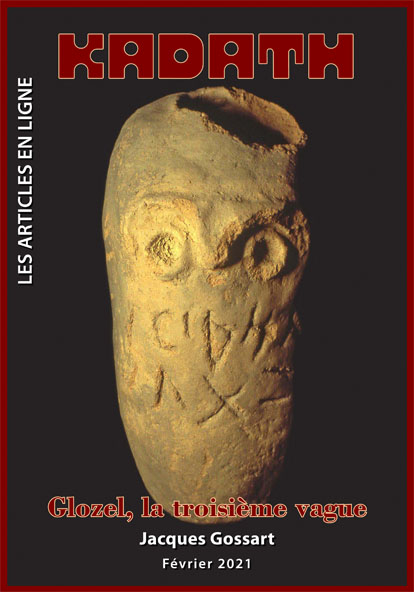 |
Aujourd’hui authentifié par de nombreuses datations, le site de Glozel n’en reste pas moins difficile à comprendre. L’étalement des dates obtenues, la difficulté d’insérer les artéfacts dans un contexte archéologique précis, conduisent au mieux à des interprétations boiteuses, et au pire à une impasse. Un livre récemment paru, signé d’un historien français, offre peut-être enfin une solution innovante et cohérente à cet éternel casse-tête archéologique que constitue Glozel. |
|
|
Jacques Gossart, Glozel, la troisième vague : Réflexions autour d’un livre atypique. Mots-clés : Glozel, Néolithique, écriture, datations, thermoluminescence, archéomagnétisme. |
Déesses mères préhistoriques et matriarcat |
Janvier 2021 |
|
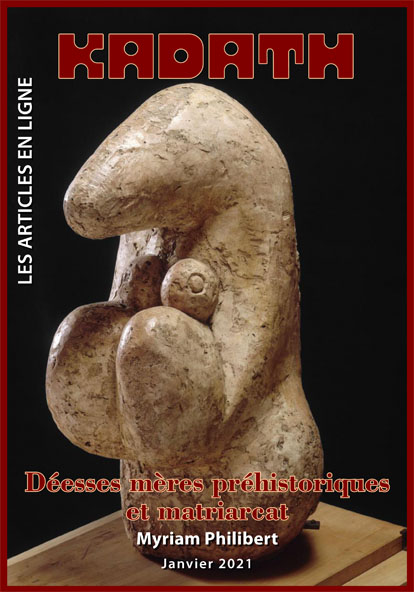 |
L’art paléolithique encourage rêveries et fantasmes. On oublie l’animal et les combats titanesques qu’il livre, pour se focaliser sur des corps. Préhistoriens et curieux s’enflamment à la vue d’une féminité triomphante et naît le « mythe » de la Déesse Mère et du matriarcat qui suscite inévitablement la controverse. Des thèses opposées s’affrontent devant ce magnifique livre d’images qu’est la grotte ornée. Vient le néolithique et la femme s’impose – Déesse Terre – régentant culture et prospérité. Puis, changement climatique ou bouleversement des mentalités, l’homme se rebiffe et reconquiert le monde, imposant patriarcat et esclavage. Ce schéma n’est-il pas sommaire et réducteur ? Le couple a été oublié ! Est-on passé, dans la fureur de la guerre, d’un règne de la mère à des états cadrés et despotiques ? Le sujet épineux de la Déesse et du matriarcat continue à alimenter les discussions interminables des spécialistes. |
|
|
Myriam Philibert, Déesses mères préhistoriques et matriarcat : La controverse. Mots-clés : Vénus, vulve, grotte, maternité, matriarcat, dualité. |
Le mystère des déformations crâniennes |
Décembre 2020 |
|
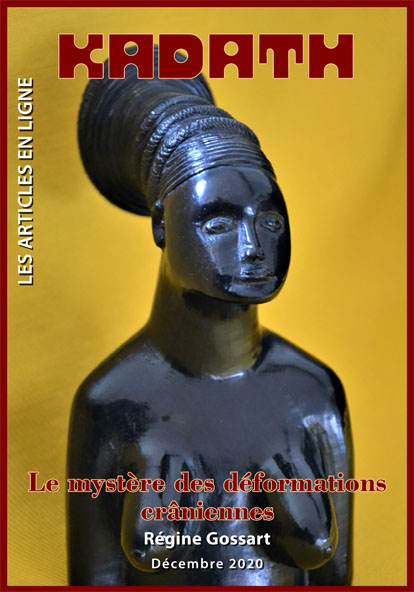 |
Cet article revient sur l’énigme des déformations crâniennes intentionnelles qu’on retrouve sur une échelle spatiale et temporelle extrêmement étendue. Le corps est à la base de ce qui fonde l’être humain. Il est une partie de l’identité individuelle mais aussi, par la manière dont il sera marqué, habillé, mis en scène…, de l’appartenance à une identité groupale, culturelle, religieuse. Une caractéristique universelle du fonctionnement psychique est de projeter sur l’environnement et la construction de l’univers le fonctionnement interne et corporel individuel. La symbolique du crâne a ainsi traversé l’histoire et les cultures, laissant sa trace dans l’inconscient collectif. |
|
|
Régine Gossart, Le mystère des déformations crâniennes : Témoignage de l’universalité de l’espèce humaine. Mots-clés : crâne, inconscient collectif, universalité du corps et de l’être générique. |
La déesse monstrueuse |
Octobre 2020 |
|
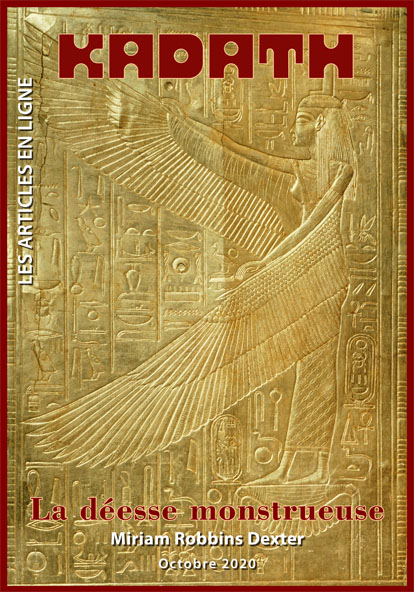 |
Cet article explore la relation des oiseaux et des serpents avec les anciennes déesses. Au début de l’âge historique, les déesses oiseaux / serpents étaient l’incarnation d’une totalité aux aspects complémentaires : elles manifestaient la vie, la mort ainsi que la renaissance. Elles furent donc longtemps vénérées en tant que dispensatrices de la vie mais dans leur variante mortifère, elles se métamorphosèrent souvent en sorcières ou en monstres, devenant ainsi un objet de moquerie et de haine. |
|
|
Miriam Robbins Dexter, La déesse monstrueuse : Dégradation des anciennes déesses aviaires et ophidiennes en monstres et sorcières de l’âge historique. |
Quel futur pour Glozel ? |
Août 2020 |
|
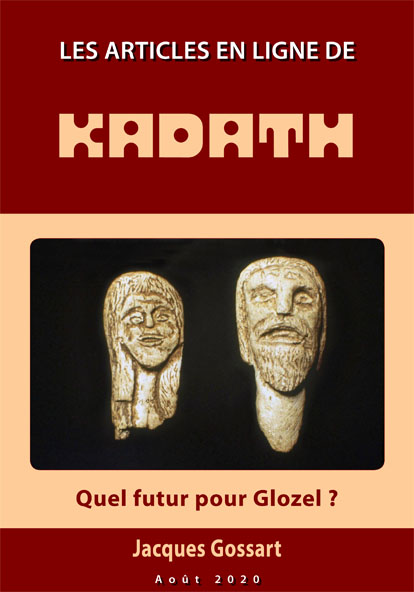 |
Quoi de neuf à Glozel ? Loin du battage médiatique qui a longtemps pollué l’atmosphère de ce site, sans doute le plus polémique de toute l’archéologie française, des chercheurs œuvrent désormais en toute discrétion pour faire avancer la recherche, sollicitant aussi bien la linguistique que l’archéologie, la géologie, l’archéogéographie, la typologie ou encore la toponymie. Et quoique modestes encore au regard des travaux à réaliser, les résultats sont prometteurs. Jacques Gossart, Quel futur pour Glozel ? |
|
La civilisation de l’Indus et le mythe aryen – Tome quatrième – |
Juin 2020 |
|
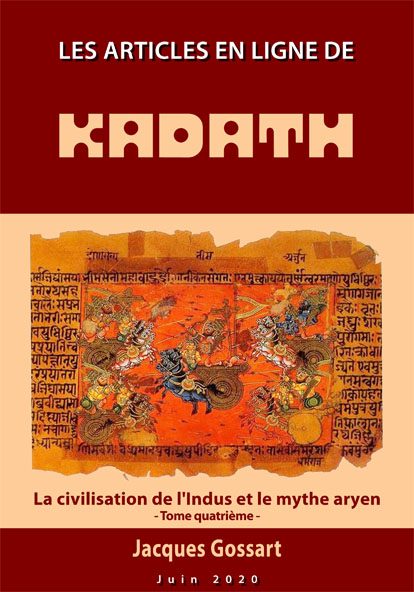 |
Dernier des quatre volumes consacrés à la civilisation de l’Indus, cet article aborde l’épineuse question de la fin de cette brillante culture. À l’heure actuelle, il existe plusieurs hypothèses pour expliquer sa disparition : invasions, causes naturelles ou catastrophe d’origine exogène. Chacune de ces hypothèses est replacée dans son contexte et fait l’objet d’une analyse critique. L’article se conclut par une synthèse générale des différents thèmes abordés dans les quatre tomes. Jacques Gossart, La civilisation de l’Indus et le mythe aryen (tome IV). |
|
L’archéoastronomie aujourd’hui : une discipline en plein essor |
Mai 2020 |
||
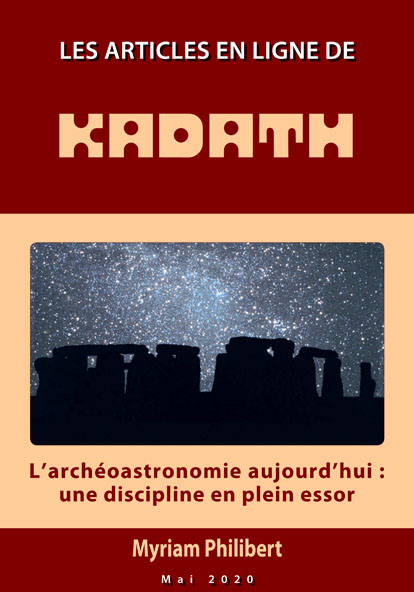 |
Le tumulus du Magdalenenberg : voici une incitation à redécouvrir l’archéoastronomie et ses avancées actuelles. Tout d’abord considérée comme « étrange » pour ne pas dire farfelue, l’archéoastronomie s’affirme solidement avec des personnalités comme Alexander Thom. Le mégalithisme, les tertres et les édifices à caractère religieux de la protohistoire sont replacés dans un contexte stellaire et dans une perspective où l’orientation a valeur absolue. De Göbekli Tepe à Corent en Auvergne, en passant par Ouessant, Guadalperal, la maison cosmique de la Couronne ou Goloring, un corpus de sites donne vie à une démarche rigoureuse, bien que spéculative. Myriam Philibert L’archéoastronomie aujourd’hui : une discipline en plein essor. |
|
|
La civilisation de l’Indus et le mythe aryen – Tome troisième – |
Février 2020 |
|
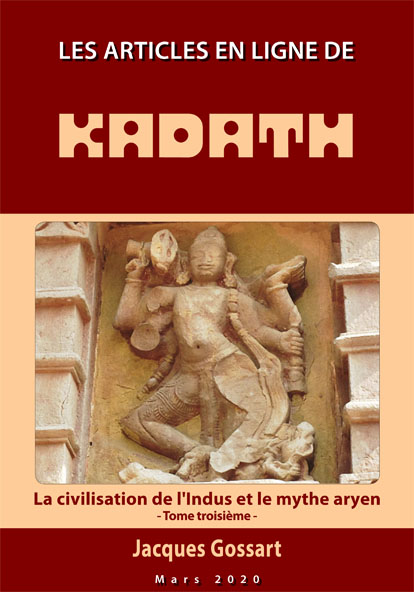 |
Troisième et avant-dernier volet de la série de textes consacrés à la civilisation de l’Indus, cet article fait le point sur l’écriture et la religion. Ces deux sujets, par ailleurs étroitement liés, suscitent encore aujourd’hui de nombreuses théories contradictoires. Ainsi en est-il pour les quelque cinq mille inscriptions répertoriées à ce jour : alors que certains linguistes tentent toujours d’en percer la signification, d’autres refusent d’y voir même l’expression d’une écriture. La religion quant à elle divise tout autant les spécialistes, partagés sur l’interprétation à donner aux rares témoins archéologiques disponibles. C’est donc vers d’autres horizons qu’il faut se tourner, pour l’essentiel une riche iconographie et une comparaison avec les croyances pré- et post-harappéennes. Jacques Gossart, La civilisation de l’Indus et le mythe aryen (tome III). |
|
Le calendrier géto-dace de Sarmizegetusa II |
Février 2020 |
|
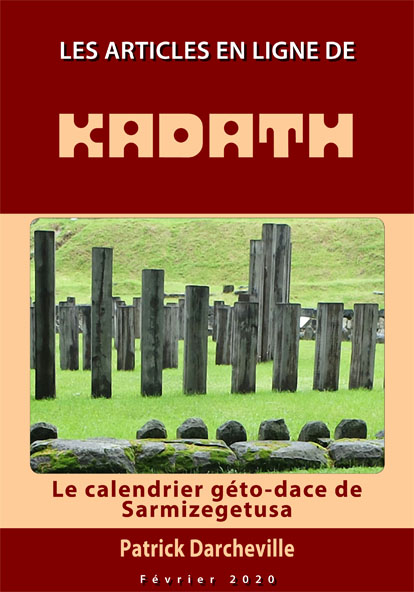 |
Faisant suite à une première partie consacrée aux bases de l’astronomie antique (octobre 2019), cet article nous emmène sur le site roumain de Sarmizegetusa. Construite et occupée par les Daces entre 82 avant et 107 après J.-C., la cité était à la fois centre religieux, militaire et politique. Son imposante zone sacrée comprenait un certain nombre de structures circulaires et rectangulaires, faites de blocs de pierre et de pieux de bois. Les éléments de cet espace sacré, souvent qualifié de Stonehenge roumain, constituaient un instrument de mesure d’une grande précision, à la fois calendrier solaire et lunaire, et règle à calcul. Patrick Darcheville, Le calendrier géto-dace de Sarmizegetusa – II. Les Daces et leur calendrier. |
|
Le calendrier géto-dace de Sarmizegetusa I |
Octobre 2019 |
|
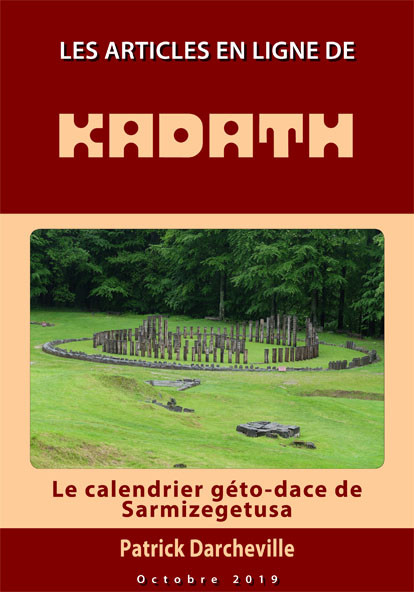 |
L’objectif premier de cette étude en deux parties est de présenter le complexe archéoastronomique de Sarmizegetusa. Ce remarquable site roumain, œuvre du peuple dace, est largement méconnu au-delà des frontières du pays et mérite de ce fait d’être présenté en détail aux lecteurs du monde francophone. Cette description, thème du deuxième volet du dossier, fera évidemment appel à de nombreuses notions d’astronomie. Aussi l’auteur a-t-il jugé utile de faire précéder la visite du site par quelques notions de base en cette matière, en rapport avec les connaissances dans l’Antiquité ; simple rappel pour certains, mise à niveau bienvenue pour d’autres. Patrick Darcheville, Le calendrier géto-dace de Sarmizegetusa – I. L’astronomie antique. |
|
Nazca Lines et géoglyphes d’Amérique précolombienne |
Septembre 2019 |
|
 |
Nazca fait rêver, suscitant controverses et mystères. À l’infini, énigmatiques, des pistes parcourent la pampa. Des trouvailles, surprenantes, replacent le Pérou au premier rang de l’archéologie mondiale. En 2018, l’annonce officielle de la découverte de nouveaux tracés sur le sable (ou géoglyphes) antérieurs à notre ère sème l’émoi. Palpa surgit avec ses personnages mythiques. Ce n’est pas tout ! La ville sainte de Cahuachi, qui surplombe cet ensemble, dévoile des temples, des techniques hydrauliques intrigantes et une civilisation florissante pendant près de mille ans. Rituellement, la cité est ensevelie et l’empire Huari s’impose. Les fouilles récentes ont mis au jour les plus anciennes pyramides américaines, en lien avec les géoglyphes les plus archaïques. La recherche est axée sur les mythèmes livrés par les dessins que le désert a préservés… Myriam Philibert, Nazca Lines et géoglyphes d’Amérique précolombienne : nouvelles découvertes. |
|
Île de Pâques : l’origine de l’écriture rongorongo |
Août 2019 |
|
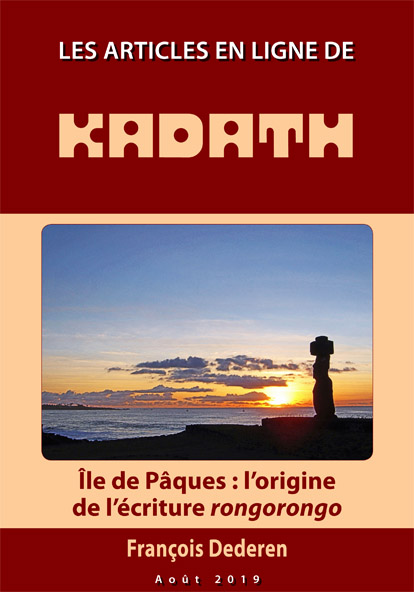 |
À l’heure actuelle, les énigmatiques signes de l’île de Pâques – les rongorongo (ou koahau rongorongo, les « bois parlants ») – défient toujours la sagacité des chercheurs et alimentent une controverse plus vive que jamais. Pour certains, il s’agit bien d’une écriture, ce qu’ils tentent de démontrer, preuves à l’appui. Mais pour d’autres, les rongorongo ne sont qu’une pré- ou proto-écriture, voire même un simple code mnémonique fonctionnant tel un pense-bête pour supporter un récit, indépendamment de toute logographie. En outre, d’autres chercheurs encore contestent le fait même que les rongorongo puissent être d’origine pascuane. Face à ces hypothèses et opinions contradictoires, François Dederen, amateur averti et l’un des rares scribes des rongorongo hors Rapa Nui, faire part ici de son sentiment concernant leur origine. François Dederen, Île de Pâques : l’origine de l’écriture rongorongo. |
|
La civilisation de l'Indus et le mythe aryen – Tome deuxième – |
Mai 2019 |
|
 |
Faisant suite à un premier article de présentation de la civilisation de l’Indus – ou civilisation harappéenne – paru en mars de cette année, ce deuxième volet tente d’apporter des réponses aux questions touchant à l’origine des Harappéens. De quels parents cette brillante civilisation est-elle née ? Fut-elle d’origine locale ou importée ? Qui sont ces Indo-Européens connus sous le nom d’« Aryens » et quel rôle jouèrent-ils dans l’histoire harappéenne ? Au sommaire de ce tome II: Jacques Gossart, La civilisation de l’Indus et le mythe aryen (tome II). |
|
La civilisation de l’Indus et le mythe aryen – Tome premier – |
Mai 2019 |
|
 |
Lorsqu’il s’agit de nommer les premières grandes civilisations des premiers temps de l’histoire, ce sont l’Égypte et la Mésopotamie qui viennent naturellement à l’esprit. Un autre centre civilisationnel contemporain est par contre largement méconnu alors qu’à son apogée, l’étendue de sa zone d’influence fut bien supérieure à celles du royaume de Sumer et de l’Égypte pharaonique ; on le connaît généralement sous les appellations de « civilisation de l’Indus » ou « civilisation harappéenne ». Une culture brillante et originale, qui donna sa pleine mesure dans le bassin du fleuve Indus au troisième millénaire avant notre ère, avec ses grandes cités telles Harappa et Mohenjo-daro. Une culture qui, dans certains domaines comme l’urbanisation, n’eut pas son égale dans le monde antique. Une culture mystérieuse aussi par bien des aspects. Fut-elle d’origine locale ou importée ? Pourquoi et comment disparut-elle ? Quel fut le rôle que jouèrent, dans son histoire, les Ārya, connus en Occident sous le nom d’Aryens ? Que peut-on dire de l’écriture harappéenne, à ce jour indéchiffrée ? Autant de questions qui seront abordées par Jacques Gossart dans une suite d’articles à paraître durant les prochains mois. Au sommaire de ce premier tome : Jacques Gossart, La civilisation de l’Indus et le mythe aryen (tome I). |
|
Les Celtes : anciennes controverses, nouvelles hypothèses |
Février 2019 |
|
 |
Toutes les théories, des plus sérieuses au plus farfelues, courent depuis toujours à propos des Celtes. Qui étaient-ils ? D’où venaient-ils ? Dans quelles circonstances s’installèrent-ils en Occident et quelle fut leur évolution ? Le mot « celte » recouvre-t-il une ethnie, une langue, une culture ? À toutes ces questions, Myriam Philibert apporte des réponses claires, et surtout nuancées. Au sommaire de cette synthèse très complète :
• Introduction (qui sont les Celtes, définitions, histoire et archéologie). Myriam Philibert, Les Celtes : anciennes controverses, nouvelles hypothèses |
|
L’Égypte entre science et religion : Les carnets inédits d’Enel |
Novembre 2018 |
|
 |
De toutes les religions antiques, celle de l’Égypte ancienne est sans doute la plus connue de nos contemporains, et elle constitue un des sujets obligés de toute production moderne – livres, conférences, films… – traitant plus ou moins du pays des pharaons. Mais la manière d’y aborder la spiritualité est à peu près toujours la même. Un livre publié au début de 2018 va à contre-courant de la vision stéréotypée généralement présentée au public : on y découvre une religion égyptienne sensiblement différente, bien plus riche que dans les approches conventionnelles. L’auteur de cet ouvrage est Michel Vladimirovitch Skariatine, plus connu sous son nom de plume : Enel. Jacques Gossart présente cette œuvre posthume à tirage confidentiel et en analyse quelques chapitres significatifs. 21 pages, 11 illustrations. |
|
Les Premiers Américains n’en finissent plus d’arriver ! |
Août 2018 |
|
 |
La découverte du squelette de Naïa, dans une grotte du Yucatán, avait conduit Michel Dethier à publier, en 2014, un article dans lequel il essayait de faire le point sur le peuplement des Amériques. Mais de nouvelles découvertes et la remontée à la surface de découvertes (parfois très) anciennes l’amènent aujourd’hui à actualiser le problème. Il s’agit d’abord de la découverte, à San Diego (Californie), d’un site qui ferait remonter la présence de l’homme en Amérique à… 130 000 ans ! Ensuite, des découvertes de plus en plus nombreuses, particulièrement en Amérique du Sud, montrent de façon insistante que le peuplement du double continent s’est, là aussi, déroulé plus tôt que prévu et ne s’est sans doute pas fait uniquement par le détroit de Béring. Des immigrants sont sans doute arrivés par le Pacifique, et les archéologues les regroupent aujourd’hui sous le terme de « Paléoaméricains ». 55 pages, 27 illustrations. |
|
À propos d’archéologie acoustique |
Mai 2018 |
|
 |
Deuxième volet de notre série consacrée aux paléo-énergies et, plus précisément, à l’archéologie acoustique, cet article de Myriam Philibert nous dévoile, en un panorama très complet et actualisé, les différentes facettes de la science acoustique de nos ancêtres : instruments de musique du paléolithique, musique des sphères de Pythagore, étonnantes caractéristiques sonores de Stonehenge, de Chavín et des structures grecques, pots acoustiques des constructions médiévales, empreintes de sons depuis longtemps éteints… Quoique les études relatives à certains de ces sujets n’en soient encore qu’aux premiers balbutiements et relèvent toujours pour l’essentiel de la spéculation, l’auteure n’hésite pas à les aborder, avec toute la prudence et les réserves nécessaires, consciente que les progrès remarquables de cette nouvelle discipline éclaireront bientôt d’un jour nouveau ces matières encore mal comprises. 27 pages, 12 illustrations. |
|
Au commencement était le son |
Janvier 2018 |
|
 |
« Au commencement fut le son »… explicitement ou implicitement, cette affirmation se retrouve un peu partout dans le monde antique, et notamment chez les Mésopotamiens, les Égyptiens, les Hébreux, les Grecs, ou encore dans l’Apocalypse de Jean. Loin d’être gratuite, cette assertion correspond à une réalité objective, ainsi que le constate Hilaire Heim, au terme d’une étude approfondie des textes, mythes, légendes et traditions des grandes civilisations préhistoriques et antiques, lesquelles peuvent dès lors être qualifiées de « civilisations du son ». 21 pages, 14 illustrations. |
|
Madog en Amérique : La saga d’Indian Jones |
Novembre 2017 |
|
 |
Dans un premier article paru dans nos colonnes sous le titre Madog en Amérique : Cap à l’ouest, jeunes Gallois, Simon Young avait examiné la possibilité que le prince gallois Madog ait découvert le Nouveau Monde dès le XIIe siècle. Il aborde à présent l’hypothèse selon laquelle l’expédition de Madog s’installa dans la tribu amérindienne des Mandans. 9 pages, 7 illustrations. |
|
De l’archéoastronomie en Ukraine au Paléolithique |
Août 2017 |
|
 |
Plusieurs découvertes faites sur le territoire actuel de l’Ukraine tendent à prouver l’existence de connaissances astronomiques au sein d’une culture paléolithique. Parmi les objets étudiés par Irina B. Vavilova et Tetyana G. Artemenko, on peut citer des fragments de défenses de mammouth portant des gravures, interprétées comme des tables d’observations de phases lunaires, le fameux pétroglyphe solaire de Chokurcha-1, et surtout deux bracelets en ivoire de mammouth provenant du site de Mezin, gravés de motifs complexes, en relation également avec un calendrier lunaire. 17 pages, 15 illustrations. |
|
Madog en Amérique : Cap à l’ouest, jeunes Gallois |
Juin 2017 |
|
 |
Au panthéon des fondateurs du Nouveau Monde, le personnage le plus inattendu est certainement Madog, prince gallois du XIIe siècle qui, dit-on, aurait atteint l’Amérique dans les années 1170. Ce Madog à l’origine de nombreuses légendes a-t-il réellement pu fouler le sol américain ? La question divise les spécialistes, comme nous l’explique Simon Young. 9 pages, 5 illustrations. |
|
Petite histoire de la métallurgie précolombienne |
Février 2017 |
|
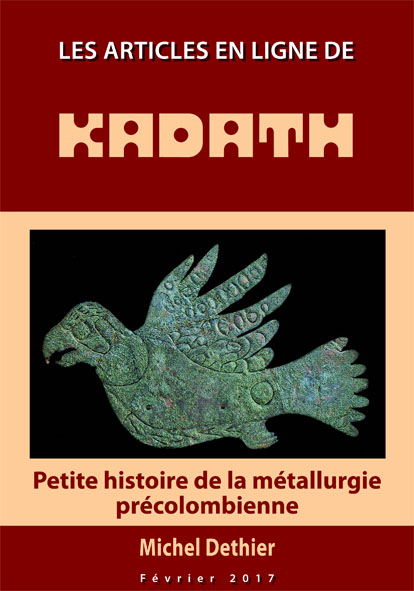 |
Très tôt, bien avant l’arrivée des Européens, les habitants du Nouveau Monde ont appris à travailler minerais et métaux et ont produit des artefacts absolument remarquables. Dans cet article, Michel Dethier brosse un tableau complet de la métallurgie précolombienne. Exploitation du cuivre natif des Grands Lacs, alliages de cuivre et de métaux précieux en Amérique du Sud, travail du bronze dans les Andes, utilisation du fer météoritique par les Inuits sont les principaux sujets abordés dans cette synthèse. 29 pages, 23 illustrations. |
|
Île de Pâques : réflexions autour des livres d’un passionné |
Janvier 2017 |
|
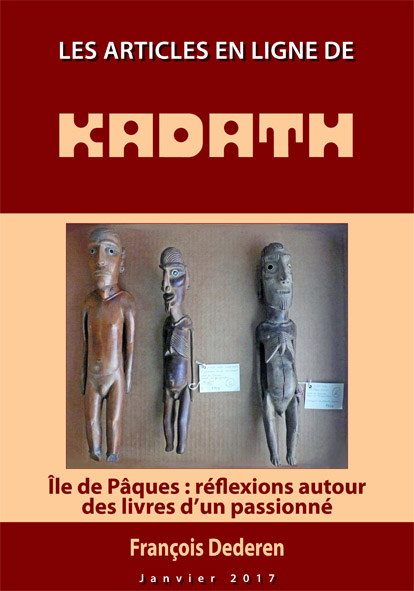 |
Jean Hervé Daude est canadien, peintre et photographe. C’est aussi un passionné de l’île de Pâques. Il est à ce jour l’auteur de neuf livres consacrés au « nombril du monde », dont le dernier, « L’empreinte des Incas - Les monuments », est paru en 2016. J. H. Daude y démontre, images à l’appui, les troublantes et nombreuses similitudes entre le Pérou et l’île de Pâques. C’est dans ce contexte qu’en 2008, il est entré en relation avec François Dederen, entretenant depuis lors une fertile correspondance avec ce grand aficionado belge de Rapa Nui, qui nous livre ici ses réflexions sur les ouvrages de Jean Hervé Daude. En conclusion de son analyse du travail du chercheur canadien, François Dederen peut écrire qu’au « fil du temps et à force de recherches tous azimuts, Jean Hervé Daude est devenu l’un des meilleurs chercheurs canadiens sur le sujet si pas le meilleur, même si parfois on peut mettre en doute certaines de ses théories et de ses affirmations » |
|
Les pierres des Incas |
Novembre 2016 |
|
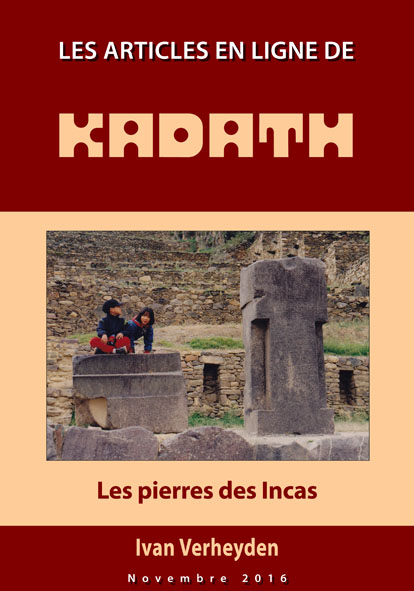 |
Cet article est d’abord une réflexion sur les énigmes que pose l’édification des monolithes de la « Vallée Sacrée des Incas ». Mais non content de passer en revue les sites emblématiques de cette région – le Coricancha, Sacsahuaman, Ollantaytambo – l’auteur, Ivan Verheyden, élargit son propos à l’ensemble des structures mégalithiques dans le monde. Les problèmes d’ingéniérie sont ainsi analysés en fonction du poids de la pierre à déplacer et de la nature du terrain à parcourir, depuis les « sarsens » de Stonehenge jusqu’aux moai de l’île de Pâques, en passant par les blocs du plateau de Gizeh, sans oublier bien sûr l’improbable monolithe de Baalbek. 12 pages, 12 illustrations. |
|
Le contenu astronomique du paysage sacré de Cuzco à l’époque des Incas |
Octobre 2016 |
|
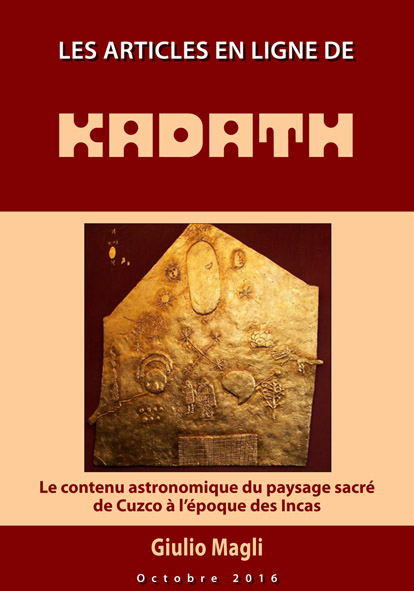 |
Quels sont les liens entre l’architecture, le paysage et le folklore astronomique de la culture inca ? C’est à cette question que tente de répondre le professeur Giulio Magli, dans cet article consacré à la géographie sacrée de Cuzco, le « nombril du monde », ainsi qu’à ses relations avec les astres. Au sommaire : - introduction à la géographie sacrée des Incas ; - les quipus et le paysage sacré ; - les « constellations de nuages sombres » dans la Voie lactée ; - Cuzco, une réplique du puma céleste ? 13 pages, 11 illustrations. |
|
Les nodules semi-ovoïdes de Saint-Jean de Livet |
Juillet 2016 |
|
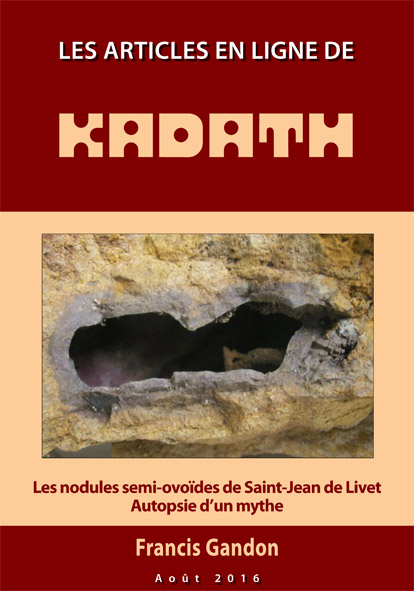 |
Depuis un demi-siècle, le thème d’artefacts ferreux découverts par deux spéléologues dans un gisement crayeux à St-Jean de Livet (Normandie) parcourt la littérature consacrée à l’archéologie parallèle. De tels « nodules » auraient été déposés au Laboratoire de géomorphologie de l’Université de Caen. En poste dans cet établissement, Francis Gandon a décidé de consacrer à la question une recherche approfondie. Au-delà de l’anecdote, le thème pose la question de l’humour dans la science française et de la santé critique des disciplines et des institutions. Il relaie celui du développement exponentiel de la rumeur et s’inscrit dans la question fascinante des « artefacts intempestifs » qui confrontent à des ruptures temporelles vertigineuses et à une autre histoire de l’humanité. 25 pages, 15 illustrations. |
|
La Babel du Ponant |
Mai 2016 |
|
 |
Cette étude fait suite à l’article « Migrations libyques à l’époque néolithique : analyse d’une gravure de Coizard-Joches, France ». Elle traite de la rencontre entre la langue des Berbères et celle des Celtes, à travers des débris de mots qui reformulent à leur manière la fable de Babel, lorsque les hommes s’exprimaient tous dans une seule et même langue, avant l’éparpillement des peuples. 22 pages, 4 illustrations. |
|
L’os d’Ishango : calculette, calendrier ou simple pense-bête ? |
Mars 2016 |
|
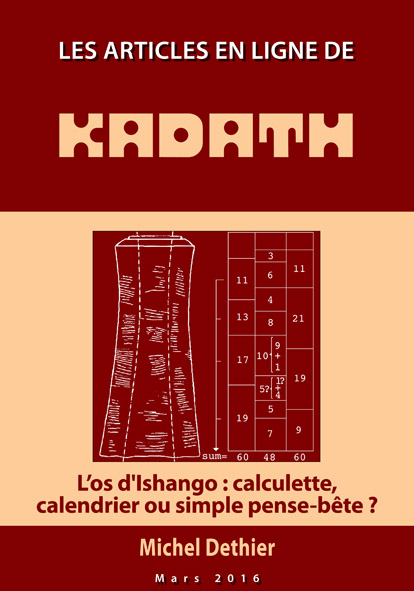 |
Les deux os préhistoriques d’Ishango (Afrique centrale), gravés de signes mystérieux, ont fait l’objet de nombreuses recherches depuis leur découverte dans les années 1950. Deux hypothèses étaient généralement retenues : calculette pour les uns, calendrier pour les autres. Mais en 2010, un mathématicien a remis en cause ces hypothèses, considérant qu’il était vain de chercher dans des documents préhistoriques des significations mathématiques ou astronomiques. Alors, qui croire, que croire ? Le point avec Michel Dethier. 22 pages, 14 illustrations. |
|
L’observatoire néolithique chinois de Taosi |
Janvier 2016 |
|
 |
À l’instar des autres grandes civilisations antiques, la Chine a, très tôt dans son histoire, développé une science du ciel basée sur l’observation. Les références en cette matière sont d’ailleurs bien présentes dans les légendes et dans les textes classiques. La mise au jour, en 2003, des extraordinaires structures de Taosi, dans le centre historique de la Chine, a apporté la preuve matérielle que, dès le troisième millénaire avant notre ère, les Chinois disposaient de moyens sophistiqués pour observer le ciel. Cité du savoir et important centre religieux, Taosi a également joué un rôle fondamental dans la naissance de l’État chinois, ainsi que le démontre Jacques Gossart au terme de la seule étude en langue française sur ce sujet. 31 pages, 22 illustrations. |
|
Sources arabes pour les voyages de découverte précolombiens |
Décembre 2015 |
|
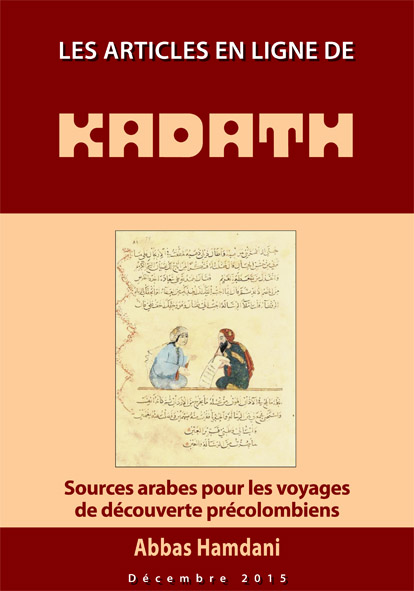 |
Dans le domaine des voyages transocéaniques précolombiens, on a souvent négligé les sources arabes du Xe au XIIIe siècles. L’article du Dr Abbas Hamdani s’articule autour de deux démonstrations qu’on peut résumer par deux citations, l’une de Mahmûd b. Abî’l-Qâsim al-Isfahânî : « Ce qui est découvert dans l’océan de notre côté peut aussi être découvert à l’autre extrémité », l’autre d’Alice Kehoe : « […] seul un fait mérite d’être affirmé : tout type de bateau […] s’est avéré capable […] de traverser un océan ». En conclusion, et au terme d’une présentation des sources arabes, le Dr Hamdani conclut à la réalité des voyages transocéaniques de musulmans, bien avant Colomb. Une exclusivité en langue française. 27 pages, 10 illustrations. |
|
Migrations libyques à l’époque néolithique |
Octobre 2015 |
|
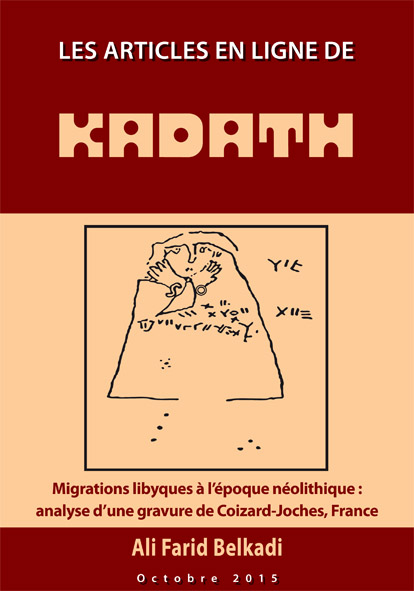 |
Jusqu’ici, le plus ancien témoignage de la langue berbère était attesté dans la Johannide de Corippe, au VIe siècle après J.-C. Différents éléments, présentés dans cet article, vont cependant à l’encontre de cette affirmation, comme la grande ancienneté du nom Didon, ou encore l’origine berbère de la dénomination « Gibraltar ». C’est dans ce cadre distinctif qu’est analysée une inscription mise au jour dans la nécropole de Coizard-Joches (IIIe millénaire avant J.-C., France) ; une analyse qui met en évidence les relations ayant existé entre des populations africaines et européennes à la veille du néolithique. Une étude d’Ali Farid Belkadi. 24 pages, 9 illustrations. |
|
La déformation crânienne intentionnelle |
Août 2015 |
|
 |
La déformation crânienne intentionnelle est une pratique culturelle opérée sur la tête du nouveau-né pendant une durée de quelques mois à quelques années, et cette déformation perdure tant que le crâne n’est pas détruit. Il est ainsi possible de reconnaître l’existence de cette pratique sur des restes anciens découverts dans diverses régions du monde. À quelles motivations ces pratiques répondaient-elles ? Quelles étaient les formes privilégiées et avec quels appareils étaient-elles obtenues ? Quel était l’effet de cette déformation sur l’individu ? C’est à ces questions que Patricia Soto-Heim répond dans cet article. 13 pages, 18 illustrations. |
|
Réflexions sur l’archéologie et les « mystères de la terre » en Grande-Bretagne |
Mai 2015 |
|
 |
Cette volumineuse monographie a pour base le mémoire de doctorat d’Adam Stout (University of Wales, Lampeter, Pays de Galles). L’auteur y reconstitue l’historiographie des « chasseurs de leys » et des « earth mysteries » ; un sujet particulièrement complexe, au vu du nombre d’intervenants et des conceptions divergentes qui sont les leurs. Adam Stout s’y est cependant attaqué, il s’en explique dès le début de cette remarquable étude, disponible pour la première fois en langue française. 49 pages, 16 illustrations. |
|
Taversoe Tuick, la chambre de l’initié |
Mars 2015 |
|
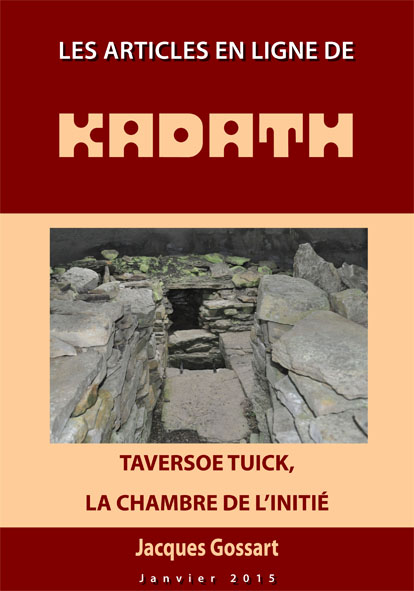 |
Parmi les structures néolithiques de la riche préhistoire des îles Orcades (Écosse), le site de Taversoe Tuick occupe une place à part. Situé à l’écart des circuits touristiques, sur l’île de Rousay, ce tumulus, d’aspect modeste au premier abord, possède en effet trois chambres dont la disposition, unique au monde, est pour la première fois présentée en détail et expliquée par Jacques Gossart. 9 pages, 13 illustrations. |
|
Psychohistoire du mythe |
Mars 2015 |
|
 |
On voit toujours surgir des questions nouvelles sur les interactions respectives qui relient la pensée mythique et la connaissance historique. Analyser le mythe en tant que mentalité accompagnant le parcours de l’humanité et analyser l’histoire en tant que science des faits écoulés, dans la perspective de comprendre sa causalité : tel est un des objets que s’est fixé la psychohistoire, avec pour ambition une lisibilité prédictive du futur. |
|
Hans-Rufolf Hitz et l’écriture de Glozel |
Janvier 2015 |
|
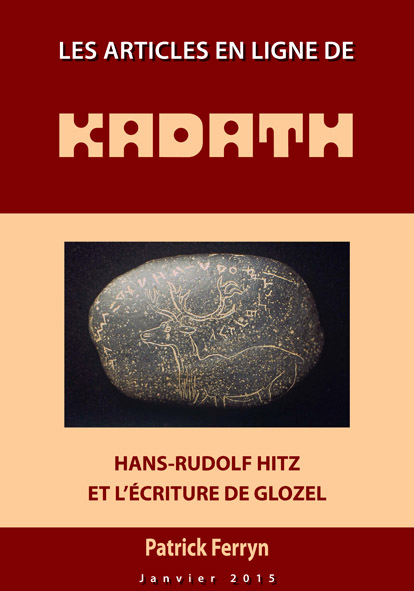 |
Parmi tous ceux qui ont tenté de percer le mystère des inscriptions de Glozel, depuis leur découverte en 1924, le Dr Hans-Rudolf Hitz (1932-2013) occupait sans conteste une place prépondérante par la rigueur et la pertinence de ses recherches. |
|
Naïa : le squelette amérindien qu’on attendait ? |
Novembre 2014 |
|
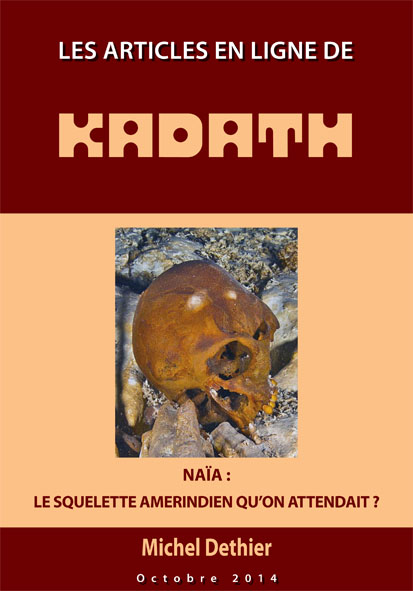 |
L’origine des premiers habitants des Amériques fait depuis longtemps débat et de nombreuses théories actuellement en vigueur sont remises en question par la mise au jour récente d’un squelette féminin baptisé Naïa. Mais, pour importante que soit cette découverte, on est encore bien loin d’avoir résolu tous les mystères entourant l’origine des premiers Américains. Michel Dethier fait le point sur cette importante question. 23 pages, 17 illustrations. |
|
Astronomie et rongorongo |
Octobre 2014 |
|
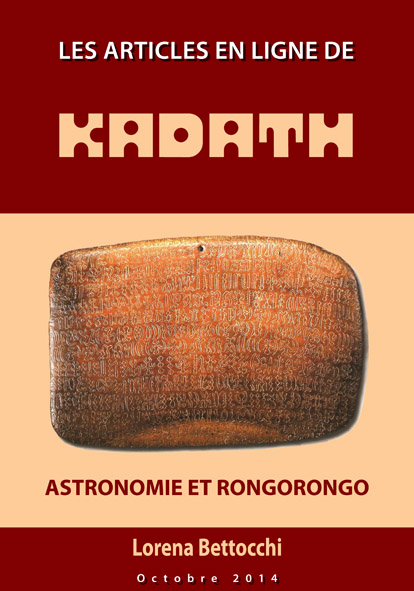 |
Parmi les vingt-six objets restants de l’ancienne écriture de l’île de Pâques, la « Mamari », l’une des plus belles tablettes, fut envoyée en 1871 à monseigneur Florentin Etienne Jaussen, vicaire apostolique de Tahiti. Cette tablette a fait l’objet d’une étude conjointe de linguistes et d’astronomes. Le point avec cet article de Lorena Bettocchi, une des meilleures spécialistes de l’écriture rongorongo. À découvrir également, du même auteur : « Rongorongo, les écritures de l’île de Pâques », Kadath n° 105 |
|
Les Premiers Américains |
Mai 2014 |
|
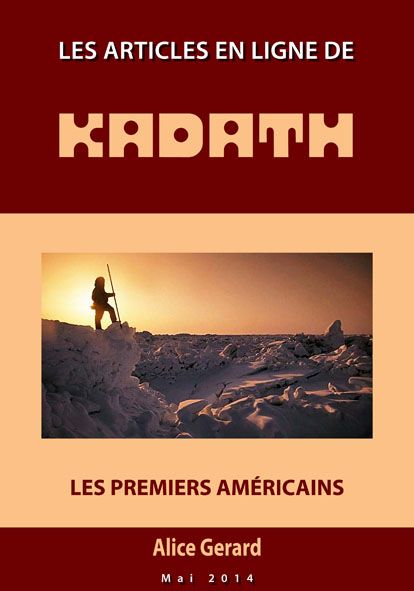 |
À la mi-octobre 2013, une conférence internationale s’est tenue à Santa Fe, au Nouveau-Mexique. Elle réunissait les plus éminents chercheurs en matière d’origine et d’ancienneté des Premiers Américains, vaste sujet qui divise le monde savant depuis la découverte du continent. Alice Gerard a assisté à ce sommet et nous rend compte des communications qui bousculent « Clovis First », le paradigme qui fait loi depuis une soixantaine d’années. 9 pages, 3 illustrations. |
|
Archéologie, topographie et paysage céleste |
Avril 2014 |
|
 |
L’astronomie est venue s’insinuer dans l’archéologie, mais ces deux disciplines se sont toujours regardées en chiens de faïence. Afin d’éviter que, de part et d’autre, on continue à se contester, Juan Antonio Belmonte et Edmundo Edwards proposent une méthode basée sur des études statistiques, recoupées (ou non) par des traditions. Après avoir montré pourquoi des sites comme Stonehenge ou Göbekli Tepe ne se prêtent (pas encore ?) à ce traitement, ils expliquent comment on peut par contre l’appliquer aux temples égyptiens, aux mégalithes ibériques, aux ahu de Rapa Nui. 10 pages, 8 illustrations. |
|
Newgrange : solstice d’hiver et solstice d’été |
Novembre 2013 |
|
 |
Le tumulus de Newgrange, célèbre pour son lever solaire au solstice d’hiver, se révèle un ensemble mégalithique bien plus complexe. Pourquoi cet encorbellement ? Pourquoi ces vasques de pierre ovales abandonnées là ? Dans une étude conjuguant archéologie et astronomie, Gilbert Forget restitue un système dont le soleil du solstice d’été, capté selon le « triangle sacré » 3-4-5, est une nouvelle fois la clé. 16 pages, 15 illustrations. |
|
L’esprit des cavernes |
Octobre 2013 |
|
 |
Que peut-on raisonnablement espérer connaître des religions du paléolithique ? C’est la question que l’on peut légitimement se poser, au vu des éléments disponibles, soit pour l’essentiel une production artistique dont on s’interroge toujours sur la signification, et des sépultures dont le contenu suggère l’existence de rites funéraires. Le point avec Jacques Gossart. 16 pages, 7 illustrations. |
|
Le serpopard des palettes égyptiennes |
Octobre 2013 |
|
 |
La palette égyptienne dite « de Narmer » porte différentes figures représentant le triomphe du roi. Cependant, la plus impressionnante image décorant l’une des faces présente un couple de créatures extraordinaires : les « serpopards ». Mais qu’étaient censés être ces serpopards ? Des animaux entièrement symboliques ou la représentation distordue d’un animal connu ? Karl Shuker tente de répondre à ces questions. 8 pages, 5 illustrations. |
|
L’action du vent sur l’eau pendant l’Exode |
Octobre 2013 |
|
 |
Il y a plus de 3000 ans, les Hébreux ont traversé la mer des Roseaux d’une manière très étonnante, puisque la Torah et la Bible en disent que « Yahvé refoula la mer toute la nuit par un fort vent d’est et il la mit à sec » (Ex.14, 21). Quelle que soit l’interprétation de cet événement, il implique un mécanisme physique que le professeur Auguste Meessen tente de comprendre. 18 pages, 8 illustrations. |
|
L'archive téléchargée sera au format de compression ZIP et il faudra extraire le document PDF avant de débuter la lecture. Voici comment effectuer l'opération en fonction des systèmes d'exploitation suivants :
 |
||||
 |
 |
 |
||
Le sytème d'exploitation Mac OS décom-presse automatiquement l'archive ZIP et la place dans la corbeille après l'opération. Le document PDF sera enregistré dans un dossier kadath-xx ou ekadath-xx situé dans la pile des téléchargements. |
Vous avez besoin d'un utilitaire pour décom-presser l'archive ZIP sur iPad. Il vous suffira au préalable de télécharger la version gratuite de Zip Extractor sur l'App Store et de l'installer. Après le téléchargement de notre publication vous pourrez l'ouvrir dans iBooks. |
Faites un double-clic sur l'archive ZIP, ouvrez le dossier kadath-xx ou ekadath-xx, activez le document PDF contenu dans ce dossier et cliquez sur ‘Extraire tous les fichiers’. L'assistant extraction de Windows s'ouvrira et vous devrez choisir par la suite un emplacement pour sauvegarder l'article. |
||
Il est fortement recommandé de sauvegarder vos téléchargements dans un dossier personnel de votre ordinateur ainsi que sur un support externe. |
||||
L’équipe de Kadath